
Whadjuk, Yuat, Amangu, Nhanta, Maya Country
It is early 2021 and Australia in common with the global community, was in the middle of the coronavirus pandemic, with the West Australian state border closed to the outside world. Disappointed like many with cancelled travel plans, I elected to use the pandemic period constructively.
On bush trips I continually encounter those most Australian of plants the Banksias. Banksias are a plant genus almost entirely endemic to Australia.
There are 79 species (and counting,) of which an impressive 61 species are found in Southwestern Australia. The various species flower year round with the nectar, and insects attracted to that nectar, an important source of nutrition for native wildlife.
There is an excellent Book titled Banksias (second edition) written by Kevin Collins, Kathy Collins and Alex George that acts as a fantastic guide for Banksia enthusiasts.
What began as a small local project to view some local Banksias, ultimately grew to span almost four years and the length and breadth of the Southwest.
Continued from :- Part 3 – Banksias of the Wild South Coast
The final part in the series looks at some of the hardy Banksias taken for granted by many in the Perth Metro, before heading Northwards to the vast botanically rich sandplains of the Northern Wheatbelt and Mid-West and ultimately to the stand-alone species of the Northwest Cape.
Banksias of the Perth Metro
Perth a city of 2 million people, sits on the West Coast of Australia where the turqouise waters of the Indian Ocean lap the coastal suburbs. The city has sadly become an urban sprawl resulting in much of the unique Banksia Woodlands of the Swan Coastal Plain making way for the human hive.
There are however remaining patches of Banksia Woodland preserved within the city. Kings Park perched high above the Swan and Canning Rivers and city skyline is the best known. Bold Park stradding the stunning coastline is another large reserve containing many Banksias, while there are a number of smaller reserves dotted throughout the suburbs also rich in endemic Banksias.
https://www.bgpa.wa.gov.au/kings-park
https://www.bgpa.wa.gov.au/bold-park
There are six fabulous Banksias found in the Perth Metro. Banksias attenuata, grandis and illicifolia can be found flowering in Spring, while Autumn sees the city’s green spaces lit up by the spectacular flowering cones of Banksia menziesii, littoralis and prionotes.
Inglewood Triangle
Inglewood Triangle is a tiny 1.7 hectare reserve that survived clearing due to it’s swampy habit and is now, with the exception of Kings Park, the closest area of remnant bush to Perth CBD.
It contains an impressive four species of Banksia. Banksia Menziesii, attenuata, illicifolia and grandis, and is fortunate to be cared for by a local bushcare group, The Friends of Inglewood Triangle, who do an excellent job dealing with the many challenges faced by an urban bushland reserve.
https://www.bushlandperth.org.au/groups/friends-of-inglewood-triangle/
Map Showing Inglewood Triangle.
Banksia menziesii – The Firewood Banksia
The dominant Banksia of Inglewood Triangle is Banksia menziesii. This Banksia has a large distribution from Perth in the South as far North as the Murchison River and Kalbarri National Park. It is certainly the most common of the Perth’s Autumn flowering Banksias with a fabulous multi-coloured flowering spike.
The young bud at first appears silver before becoming red tipped with silver. The flowers opening from the base release golden styles so that the flowering cone becomes acorn-shaped and a trifector of Ruby Red, Silver and Golden-Yellow.
Banksia menziesii.

Lightning Swamp
Map showing Lightning Swamp.
Lightning Swamp Reserve is a generous 71 hectare sanctuary hemmed in by two of Perth’s busiest roads and the suburb of Noranda. A haven for Banksias, it is the best place in the Perth metro to see Banksia littoralis.
Banksia littoralis – The Swamp Banksia
It is the wetter Southeastern corner of the reserve where a beautiful stand of Banksia littoralis can be found. When flowering during the Autumn months, the feeding chatter of White-cheeked Honeyeaters reveals the location of this important nectar source, long before it is seen.
Littoralis comes from the latin “of the coast” indicating the coastal habit of the species. I have found this species from Jurien Bay to the South Coast Highway as far East as Cape Riche. It can also be found in the Darling Scarp, and is a common Banksia seen by walkers traversing the swampy depressions on the Bibbulmun Track. Yourdamung Swamp, North of Collie, is an exceptionally good spot for Banksia littoralis.
Bankia littoralis.
Banksias of the Northern Sandplains
In April 2021 Anzac Day fell on a Sunday resulting in a long weekend. I had chosen this weekend to head North to Jurien Bay and nearby Lesueur NP to look for the locally endemic Banksia tricuspis.
These were the crazy days of covid lockdowns and when a traveller tested positive to covid after leaving hotel quarantine in Perth a regional lockdown was touted for 12.01am Saturday morning. Enough time to load the 4WD after work on Friday afternoon and cross the regional border before it closed, controversial I know…..
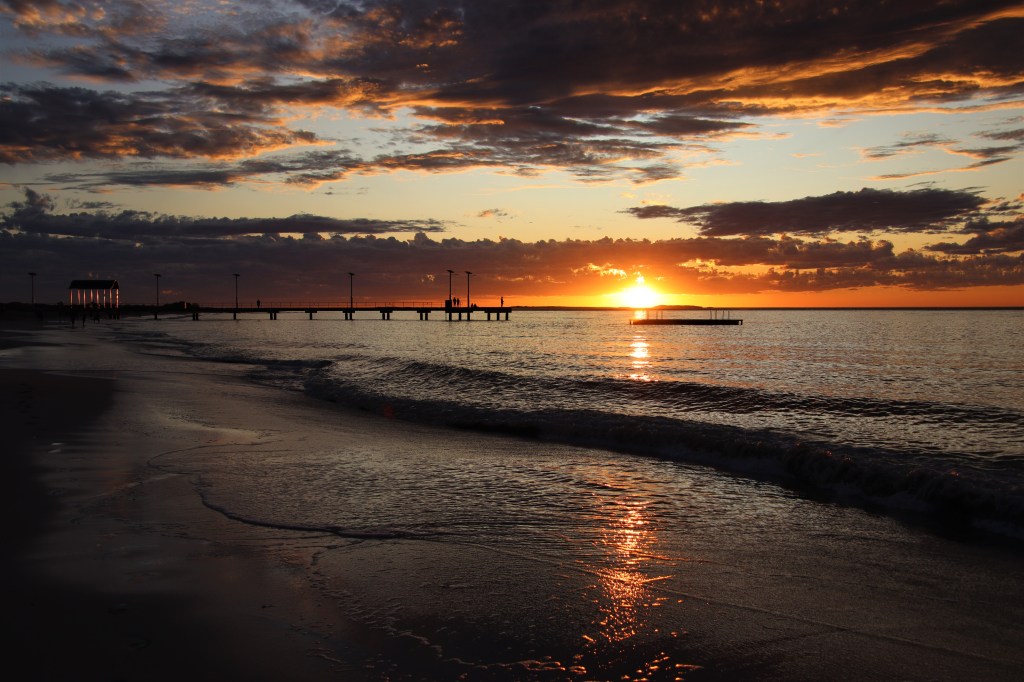
Jurien Bay sits quietly on the sandy coastline 200kms North of Perth. It was a warm and slighty humid Autumnal evening on arrival, and after checking in at the pub I walked to the beach to enjoy a magical sunset to the sound of small waves gently lapping the soft sand.
Sultry Sunset at Jurien Bay.
Early the next morning, while Jurien Bay was slowly waking, I made the short drive inland to Lesueur NP. As the road climbs from the coast the roadside verges were bursting with colour from a multitude of flowering Banksias.
It was a crisp morning that often follows a sticky night, and cool mists were swirling at the slightly higher altitudes of the hinterland. The entrance to the National Park was crowned with a favourite Bankia of mine, Banksia prionotes.
Banksia prionotes – The Acorn Banksia
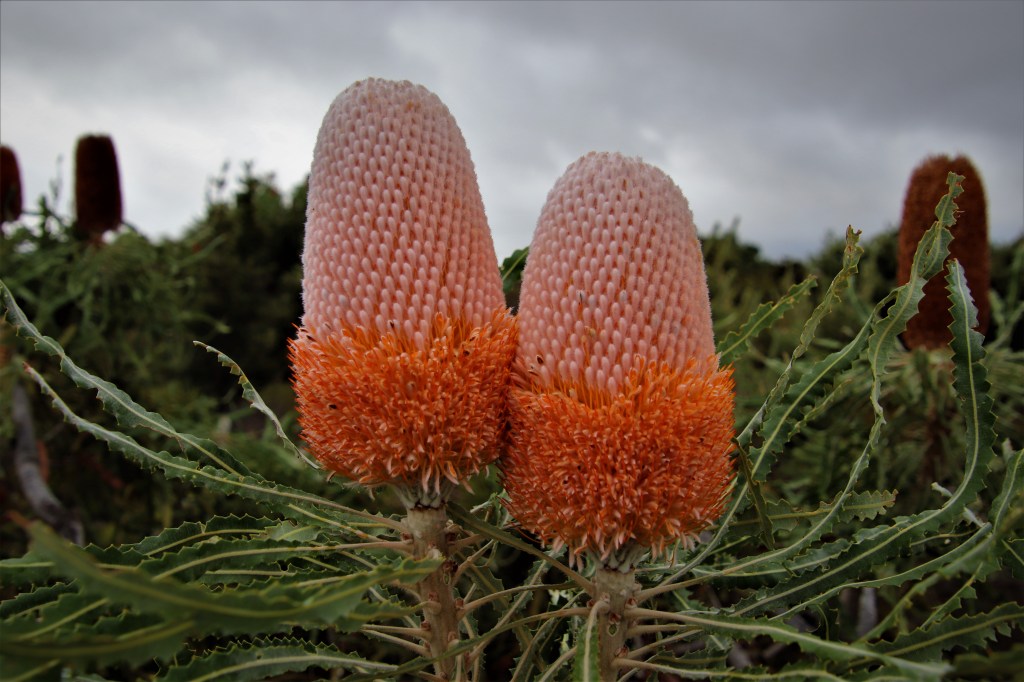
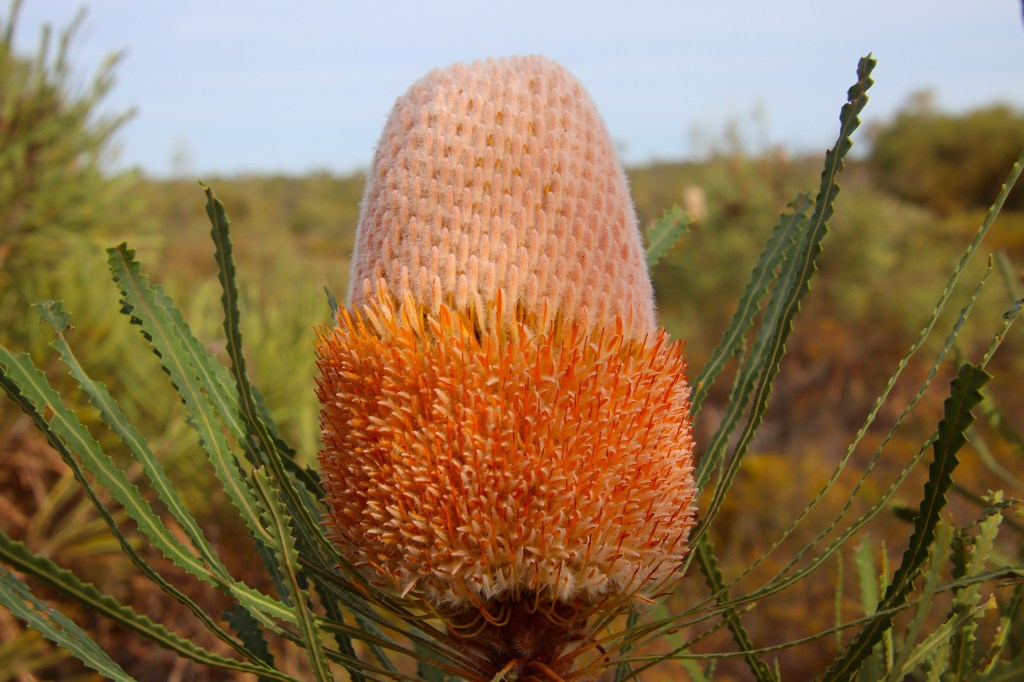
One of the best known West Australian Banksias and a common sight around Perth in Autumn, Banksia prionotes comes into flower as soon as the month ticks over to February, flowering well into Winter. The flower buds are white and delightfully woolly, turning orange as the styles open from the bottom of the spike to give them the acorn appearance from which they get their common name.
I have encountered this species from Kalbarri National Park in the North, down to Perth and East into the Wheatbelt. Beverley Cemetary has a lovely stand of Banksia Prionotes, which occur as lofty trees at this location.
Banksia prionotes.
There is a single 18.5km Scenic Loop Drive through Lesueur National Park. The carpark at the halfway point is the trailhead for the Mount Lesueur Walk Trail. This 4km return walk to the summit of Mount Lesueur is THE place to see the Banksia tricuspis.
https://exploreparks.dbca.wa.gov.au/site/lesueur-scenic-drive
Banksia tricuspis – The Lesueur Banksia
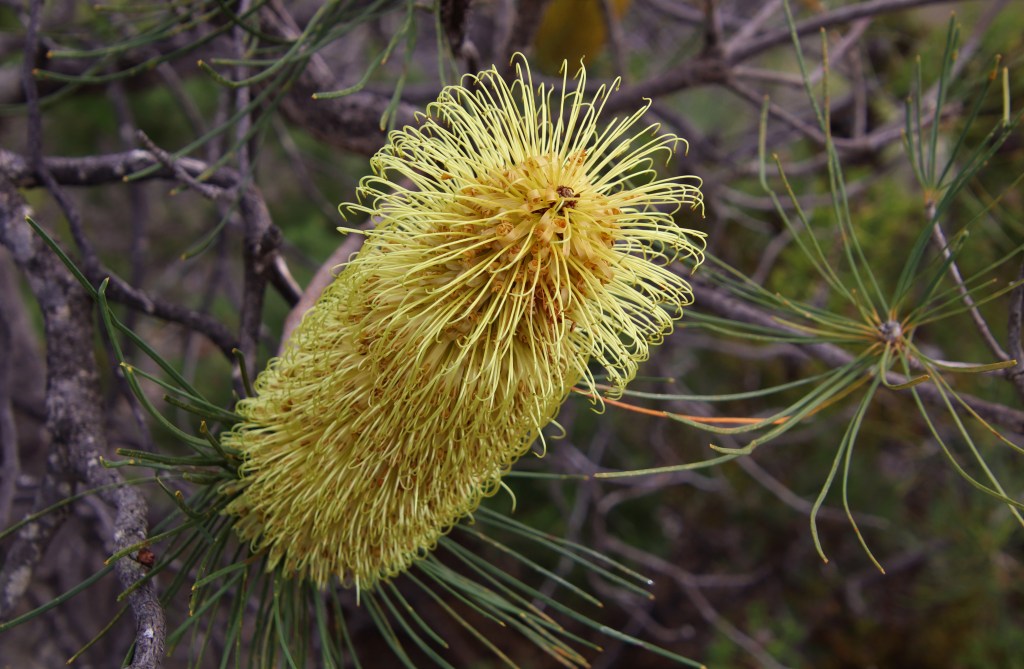
The foliage of Banksia tricuspis is similar to that of a pine tree, which somehow seems appropriate for a Banksia with a partiality for the gravelly soils and rocky slopes of the higher altitude, to which they are endemic. The tips of the leaves are three-pointed and this provides the genesis of the name tricuspis.
At the time of my visit in late April they were well into the flowering season, and the call of honeyeaters flitting amongst the 4m trees was delightful. Honey Possums also make use of this locally endemic Banksia, as witnessed by local wildlife guru Tamara Wilkes-Jones. Instagram handle – numbat_tales. https://www.instagram.com/numbat_tales/?hl=en
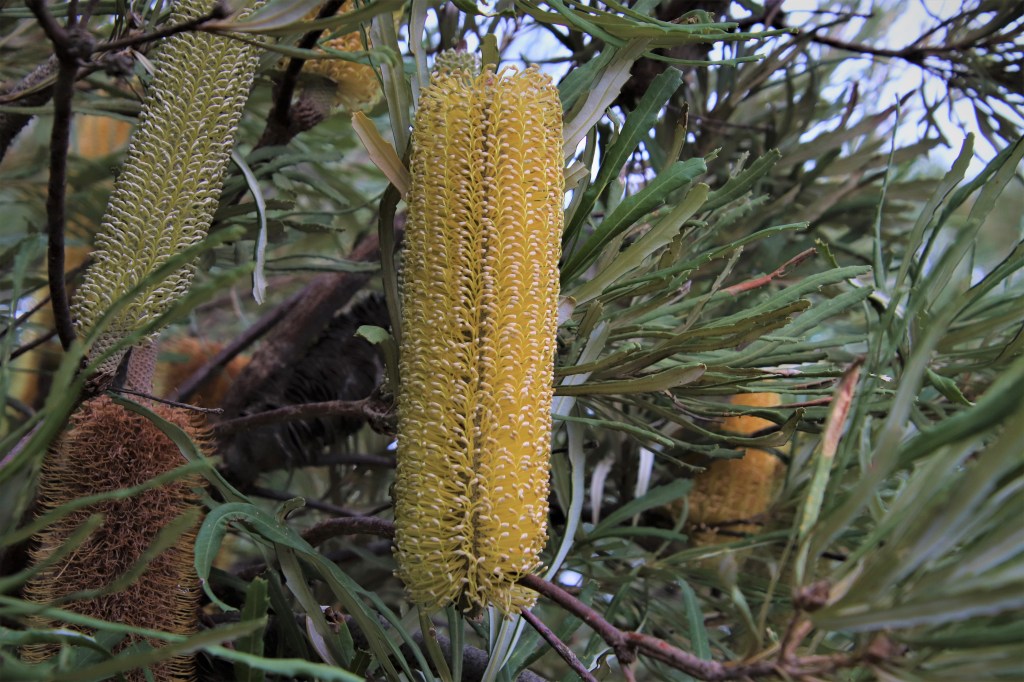
Yellow is a common colour of Banksia flowers, but Banksia tricuspis cones are quite distinctive with their long hooked-styles opening from top down.
Banksia tricuspis.
Lesueur National Park.
The morning mists had long dissipated after a morning spent photographing tricuspis, so that while descending from the National Park down to the coast and there were great views back to the flat-topped mesa of distinctive Mount Michard.
Banksia menziesii was another species flowering on the Scenic Loop Drive in April, while in Spring the flowers of Banksia attentuata would be a prominent sight.
Lesueur National Park contains over 900 species of plant equating to an impressive 10% of Western Australia’s plant species. Less well known is that the park is a reptile hotspot containing 52 species.
Mount Lesueur National Park.

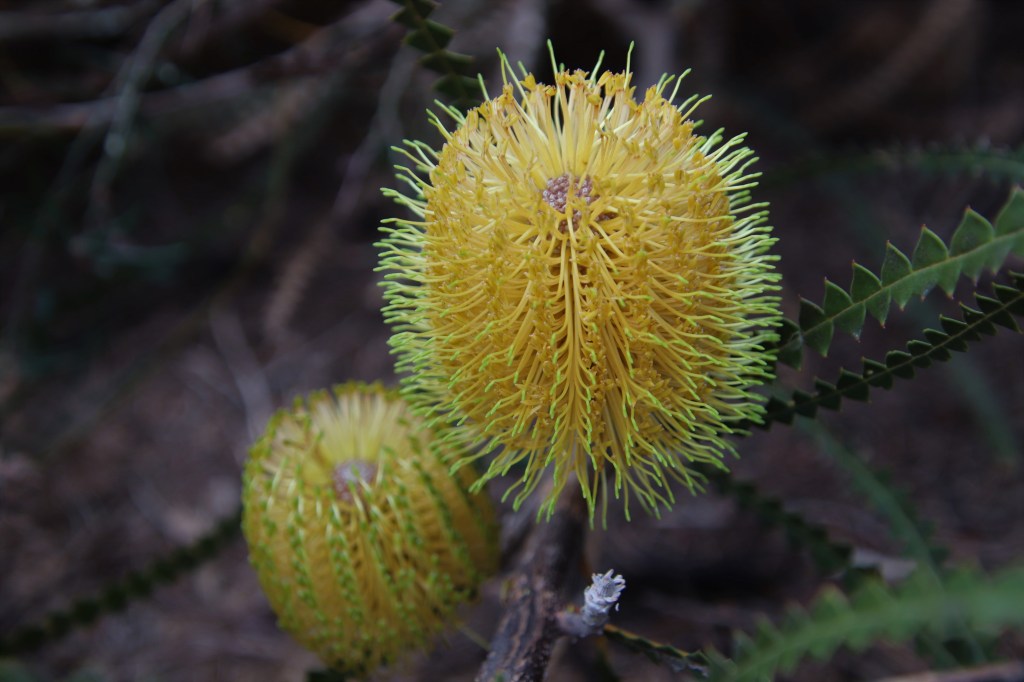
Banksia candolleana – The Propeller Banksia
Returning to Jurien Bay along Cockleshell Gully Road, examination of the roadside vegetation revealed a hidden treasure.
Banksia candolleana, also known as the propeller Banksia on account of the shape of the seed head, is a low spreading shrub twice as wide as it is high. April is very beginning of the flowering season and the globular flower spikes, often clustered together in pairs are a brilliant yellow in colour and hidden deep within the foliage, but given away by an almost overpowering sickly-sweet smell of the nectar.
Banksia candolleana.
Continuing along Jurien East Road I stopped to examine the roadside verges that had been a riot of rich colours early that morning.
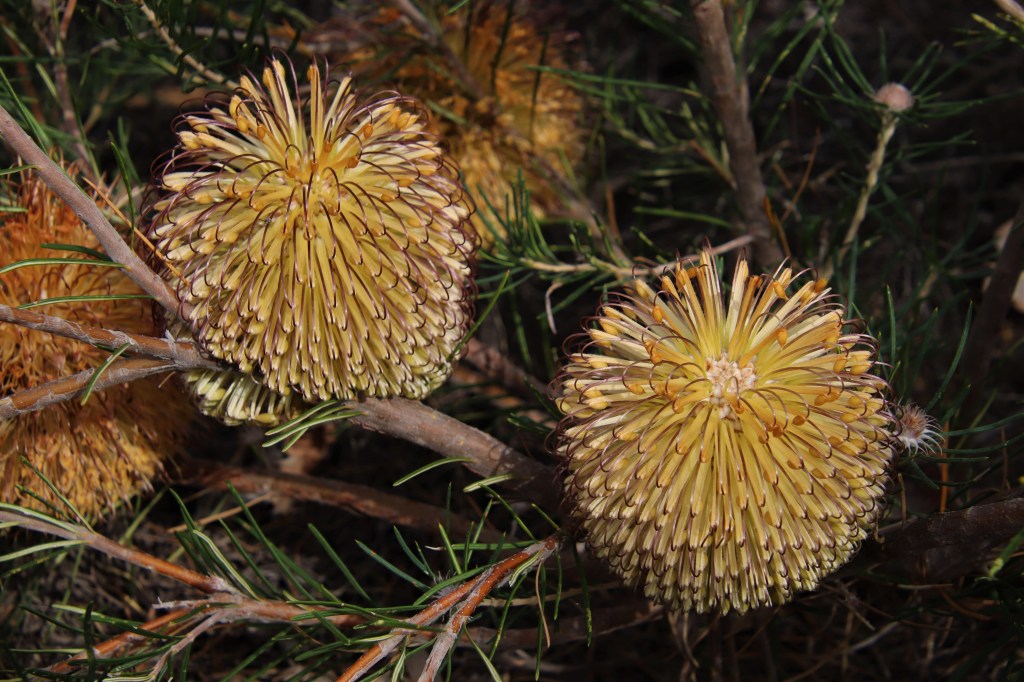
Banksia telmatiaea – The Swamp Fox Banksia
The roadside vegetation was ablaze with the jazzy orange of the abundant Banksia prionotes, the dominant species. Banksia littoralis were also present in the wetter low-lying sections, as well as another smaller and less conspicuous Banskia of swampy ground.
Banskia telmatiaea is similar to appearance to the Sphaerocarpa Group and the attractive flowers were a lovely blend of cream, gold and purple.
When photographed I was unsure of the species but received help from the Banksia Lovers Facebook Group. Banksia telmatiaea has a flowering period listed as May to August so this is at the very beginning of the flowering period.
Banksia telmatiaea.
On the final morning of the long weekend I made the journey back up Jurien East Road to Coomallo Nature Reserve which abuts the North West Coastal Highway where the final Banksia of the weekend was found.
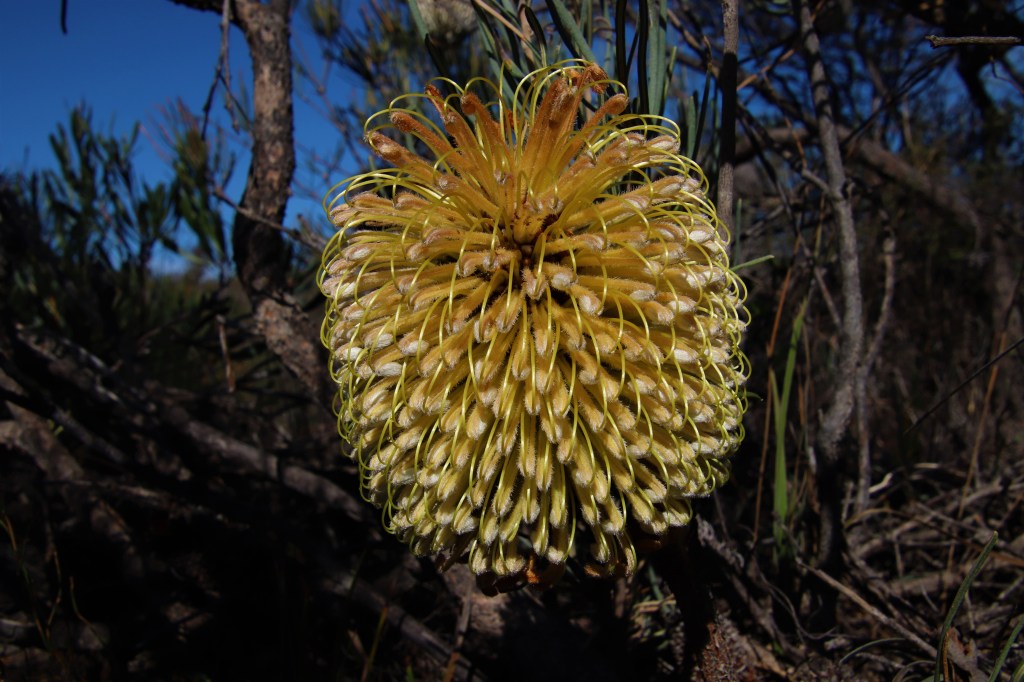
Banksia grossa – The Pineapple Banksia?
Banskia grossa a is small shrub to around 1m with a flower reminiscent of a pineapple!
It is probable from the diminutive size of the plant, and proximity of the flowers to the ground, that Banksia grossa is pollinated by nocturnal mammals, for the low hanging flowers were dripping in nectar as the first of the suns rays pierced the undergrowth.
I had read of the indigenous peoples of the Southwest incorporating Banksia nectar in their diet and this was the first time the opportunity had presented. The taste and texture was reminiscent of honey indeed the early Europeans called the Banksias by another name…Honeysuckle. Banksia candolleana was another Banksia common to Coomallo Nature Reserve.
Banksia Grossa.
Monday morning was spent at the beach making the most of the Autumn sunshine and the warm waters of the Indian Ocean, in the knowledge that the return to Perth later that day across the regional border would be back into the hysteria of a covid-panicked city.
Sitting on the beach I pondered the botanical richness of Banksias around Jurien Bay, for to see seven species in flower at one time in a small area makes for a unique botanical experience.
Guest Plant
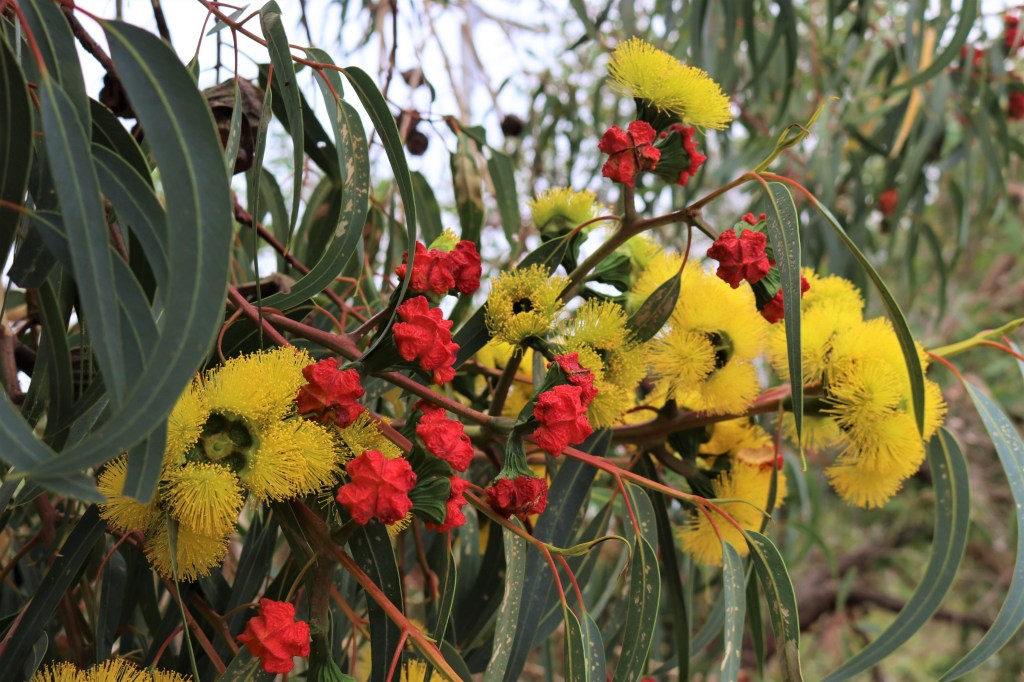
Yellow Flowering Gum – Eucalyptus erythycorys
The Yellow-flowering Gum is a eucalyptus species distributed along the coastal plain North of Perth. It is also known as the Red-capped Gum or Red-helmet Gum, because prior to the February to April flowering season a distinctive red cap appears. Once the cap has been discarded brilliant bright yellow flowers emerge in groups of four.
It is not only the flowers of this species that are appealing, the distinctive leaves of Eucalpyptus erythycorys also have a most attractive elongated sickle-shape.
Eucalyptus erythycorys.
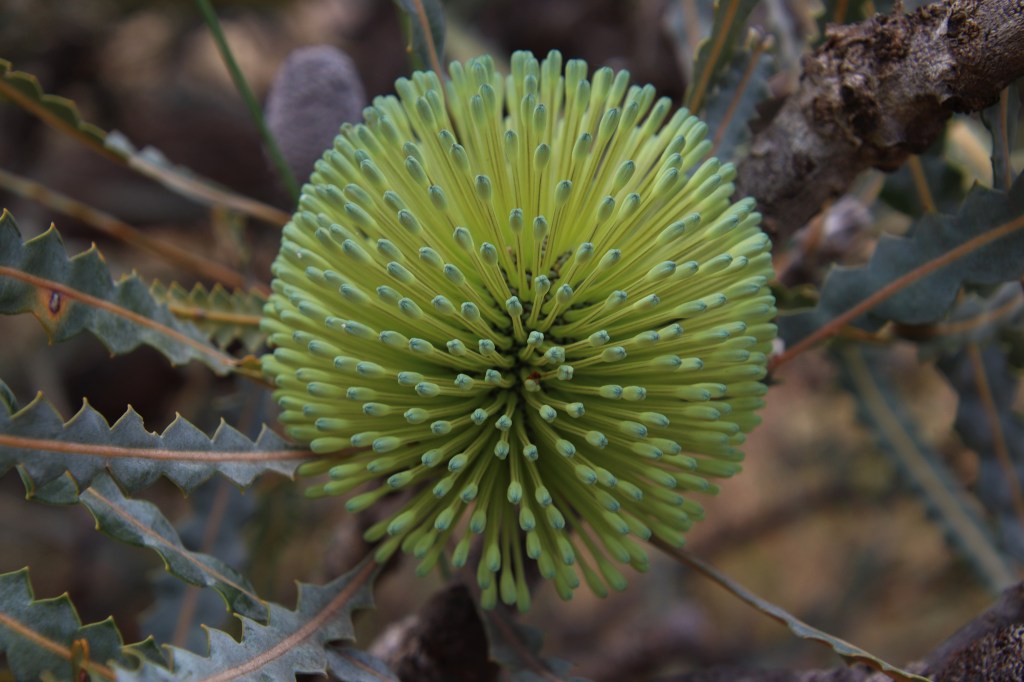
Banksia elegans – The Elegant Banksia
During the month of October Banksia elegans can be found in remnant roadside vegetation in the locality of the Arrowsmith River. The dome-shaped flowers have rigid yellow perianths with the most beautiful translucent blue limbs. The hazy light from the overcast, cloud-covered sky gave this beautiful Banksia an almost ethereal appearance.
Banksia elegans.
There were a further three remaining Northern Sandplain Banksias that I hoped to photograph, but for these to be in flower I would have to wait until Summer. Two flowered in December, the third in January.
It was a late Friday arvo in December that I departed Perth to travel the 250km along the Great Northern Highway to the town of Dalwallinu. Here, I would overnight, before an early start the following morning to look for the inland species Banksia benthamiana.
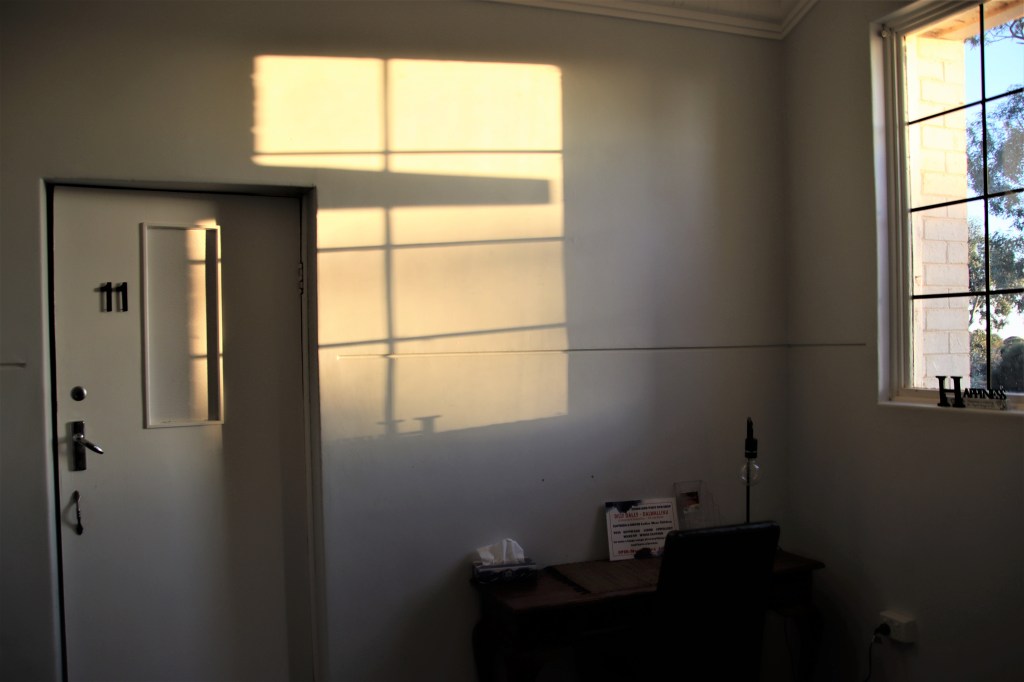
Accommodation had been somewhat hard to come-by in Dalwallinu that Friday on account of the Christmas Street Party taking place that evening. The last accommodation available was the Old Convent Guesthouse on the outskirts of town.
https://www.theoldconventdalwallinu.com.au/
It was actually a wonderful find that comes highly recommended. The owners were helpful on booking, the room although small, was luxuriously furnished for the very reasonable price of $100. The historic building was extremely atmospheric and a continental breakfast was included in the price.
The Old Convent Guest Guesthouse.
The following morning after breakfast, I was on the road early to avoid the worst of the harsh Mid West sunlight so unkind for photography. After passing through the town of Wubin I drove the Wubin-Mullewa Road Northwards, and after a mere 5kms I got the first flashes of orange in the roadside vegetation.
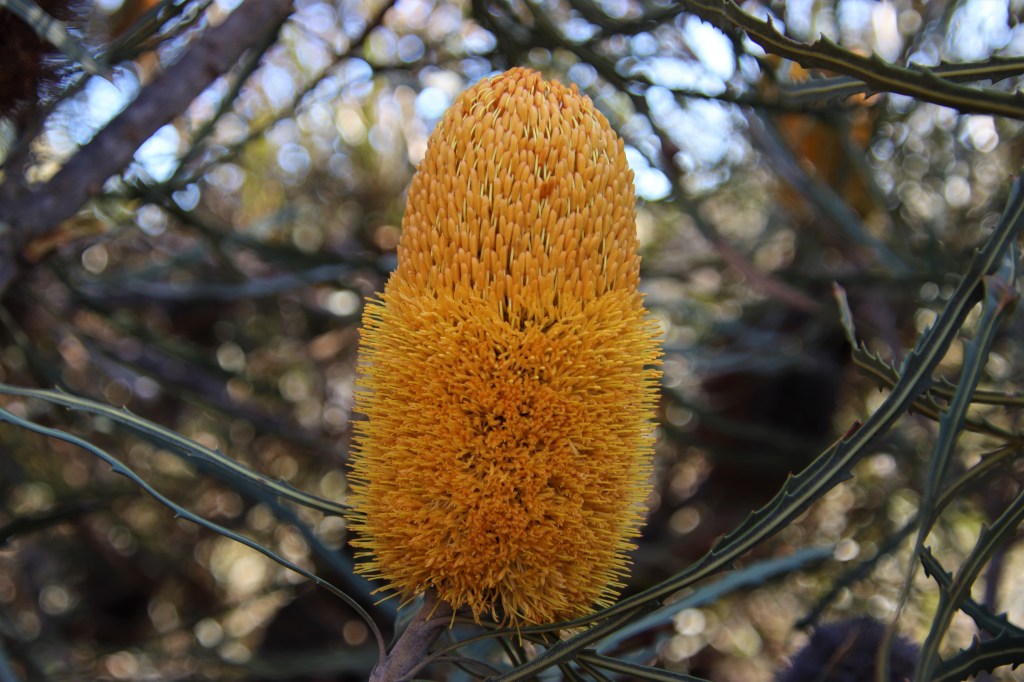
Banksia benthamiana
The flower spikes of Banksia benthamiana are rich golden in colour and are sparsely dotted throughout the 4m tree, the leaves of this species are both narrow and elongated lending a stylishness to this already attractive Banksia.
The Wubin-Mullewa Road passes through the main area of distribution of the species between these two towns. December seems to be the peak of the flowering period although by the time of the visit in mid-December, many of the flowers had done their dash.
Banksia benthamiana.
Driving North through the agricultural centres of Buntine and Perenjori it was clear that Banksia benthamiana was not especially common, having large distances between stands.
After stopping at Morawa for a coffee I took a detour towards Mingenew and then drove North, further detouring through Indarra Nature Reserve where I first encountered the second species I was hoping to see, Banksia sceptrum.
It was by now an exceedingly hot day approaching 40C, so after waiting out the worst of the afternoon heat at accommodation at Mullewa, I took a late afternoon drive East along the Geraldton-Mount Magnet Road finding further Banksia benthamiana trees in the roadside vegetation.
Kalbarri National Park
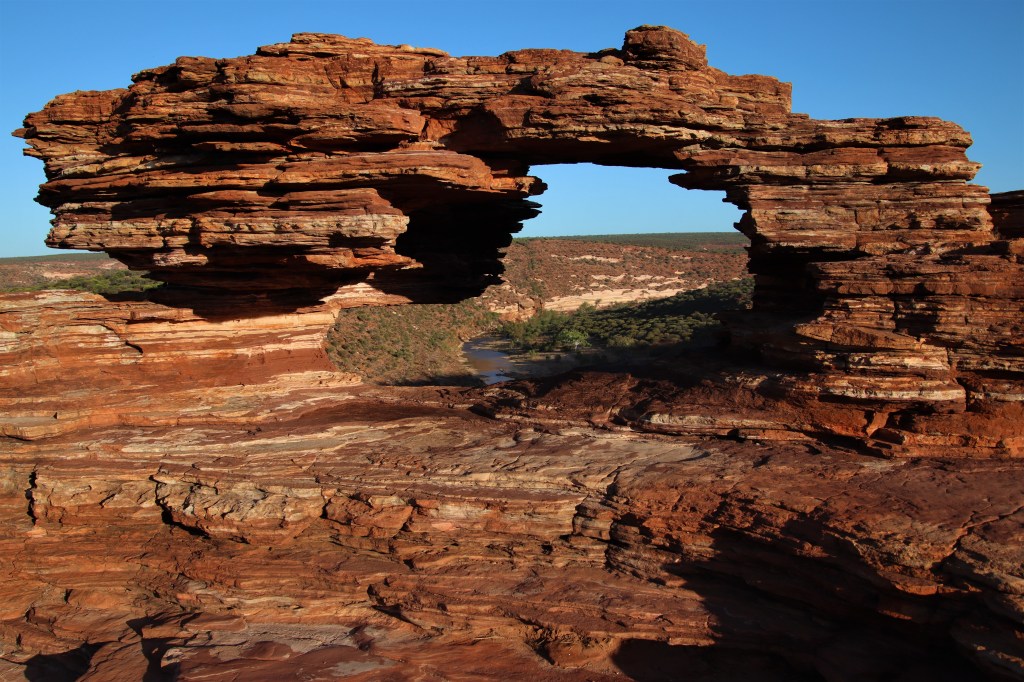
Kalbarri National Park is a 186,000 hectare National Park centered around the Murchison River Gorge. It’s most famous drawcard is Nature’s Window, a natural rock arch in the strikingly coloured Tumblagooda Sandstone.
The National Park has an array of attractions including Coastal Cliffs, a brand new Skywalk, abseiling, walks and wildflowers.
Nature’s Window Kalbarri National Park.
Banksia sceptrum – The Sceptre Banksia
I entered the National Park from the Northwest Coast Highway along the Ajana-Kalbarri Road . Alongside the road were spellbinding stands of the magnificent giant flowering cones of Banksia sceptrum. A true behemoth among Banksia flowers.
In an earlier post I considered Banksia grandis to be the king of Banksias. Well every king needs a queen, and there is no doubt in my mind that Banksia sceptrum would be that stately queen.
The daily cycle to work when I lived in Perth took me past a garden containing Banksia sceptrum, and so I was well informed of the short flowering period, encompassing a mere two months from December into January. The colossal flowering cones of Banksia sceptrum take the longest of any Banksia to develop.
Majestic Banksia sceptrum.

The best road to see this species within Kalbarri National Park is the road to Nature’s Window. Here the vigorous wind gusts were heavy with the earthy scent of the Banksia stands.
December is a hot and windy month on the Northern Sandplains, and so the majority of the three days at Kalbarri were spent alongside the resort pool escaping the heat. Monday was especially hot with the day high reaching 38C, but that night a cool change moved through.
Sure to make the most of the unusually cool conditions the following morning, I rose early and drove out to the National Park. It was spellbindingly still at this early hour with cool mists cloaking both the river gorge and surrounding plains. It was utterly magical.
Misty Sunrise – Kalbarri National Park.
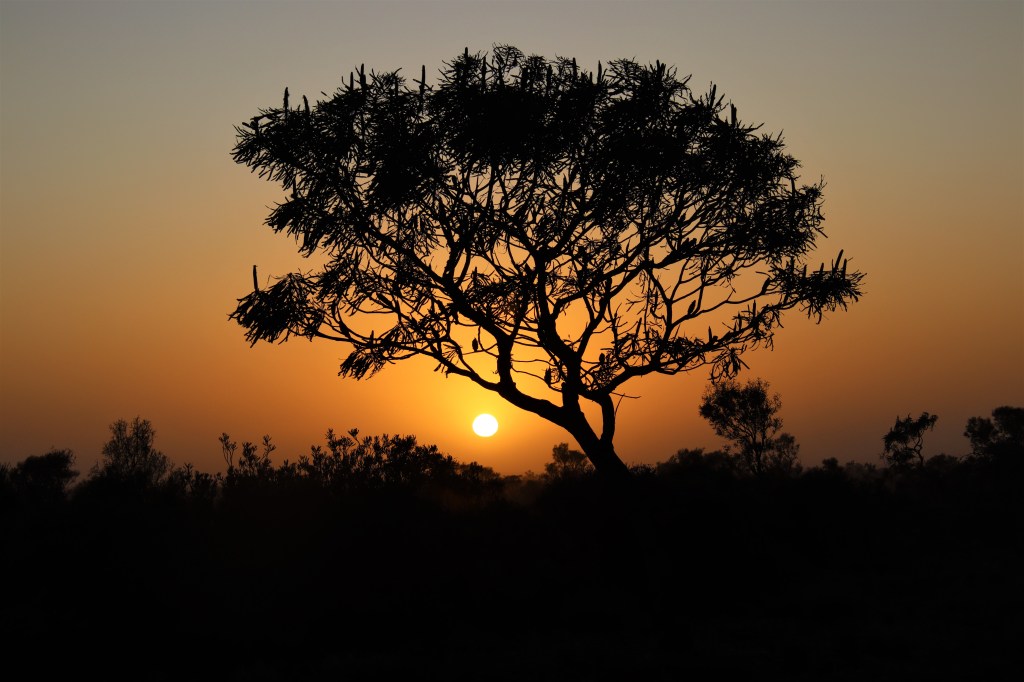
The destination that morning was Hawks Head Lookout, a reintroduction site for the Black-footed Rock Wallaby. This Wallaby was almost extincted in Southern WA by the fox and cat. A decade ago abseilers at a remote location in Kalbarri National Park rediscovered a tiny population of this Wallaby. Since then translocation of the species from the Wheatbelt populations in conjunction with feral animal control has bolstered the species at Kalbarri National Park to a now healthy population.
See here for another Rock Wallaby location:- Where to see Mammals – Western Australia.
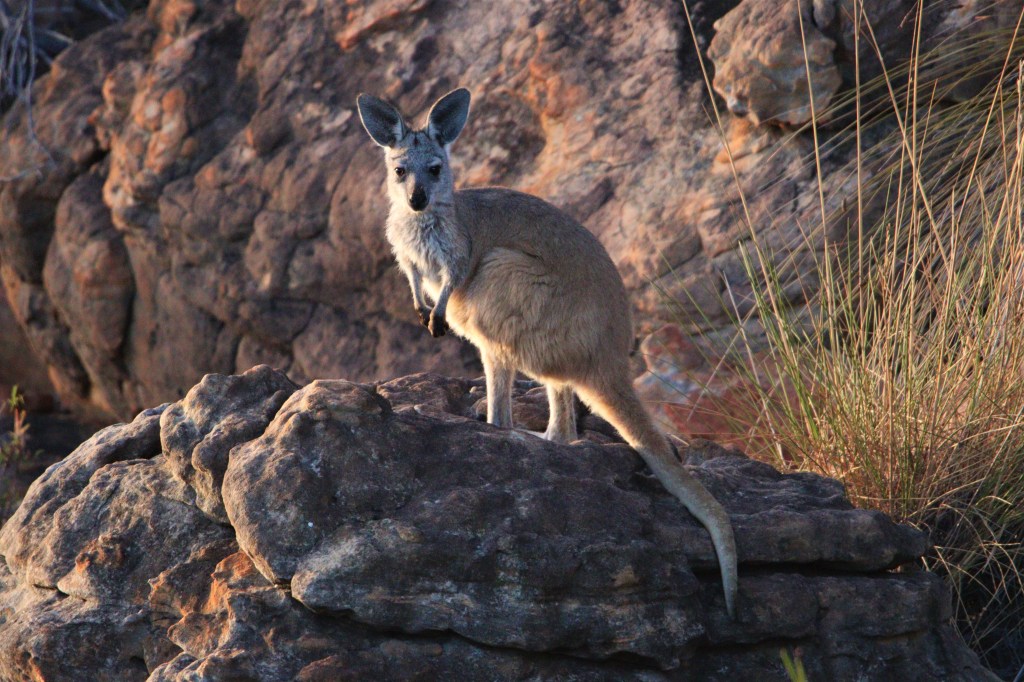
Following the footpath from the carpark to the gorge, the first macropod encountered wasn’t a Rock Wallaby but another rock loving macropod, the Euro or Wallaroo, which I suspect was returning to the steep cliffs of the gorge after a night grazing the surrounding plains. The Euro was a juvenile, although the mother remained elusive.
Euro – Hawks Head Lookout.
Sitting quietly on a precipice adjacent to the lookout, there were smashing views up and down the Murchison River Gorge, and at this early hour I had it all to myself.
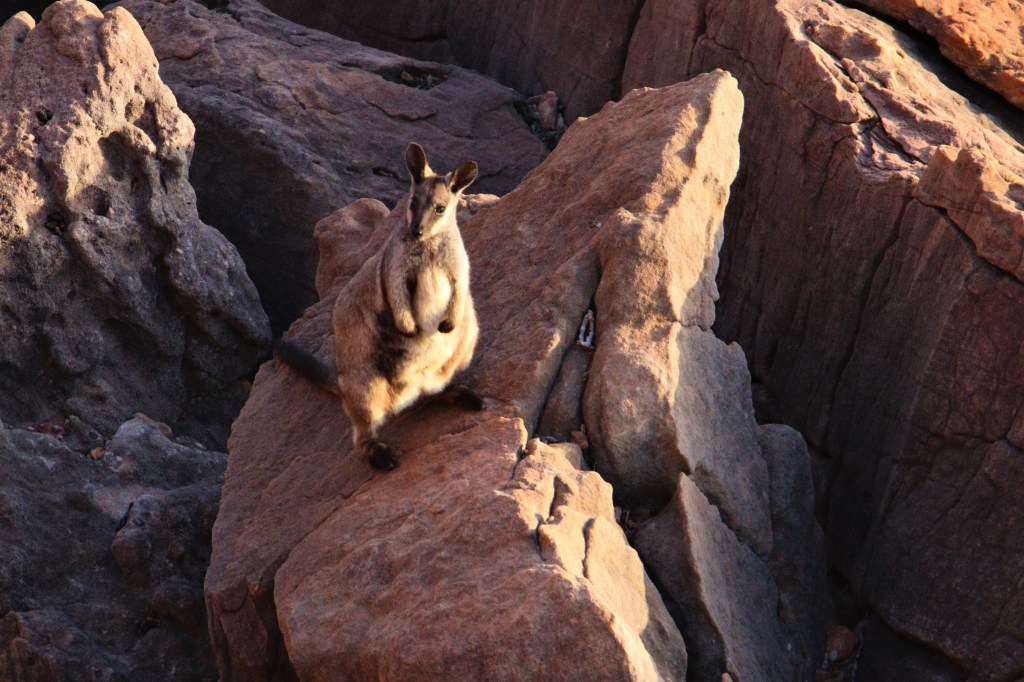
Far below a jumble of giant boulders dotted the valley floor, having fallen from the steep cliffs eons ago. Scanning for some time, movement eventually gave away a Black-footed Rock Wallaby, and shortly after a second. These animals were enjoying the first of the suns rays after what had been a relatively cool start to the morning.
Black-footed Rock Wallaby – Hawks Head Lookout.
Banksia lindleyana – The Porcupine Banksia
During the December trip to Kalbarri National Park, there was a Banksia in early bud, but not yet in flower. The plant was on all of the Ajana-Kalbarri Road, Nature’s Window Road, and George Grey Drive, on the approach into town along the coastal cliffs. This gave a place to begin searching for the final Summer-flowering Banksia species the following month.
So it was on the public holiday weekend in January 2023 that I once again made the trip North to Kalbarri. Banksia lindleyana was indeed common and flowering at the sites found in December.
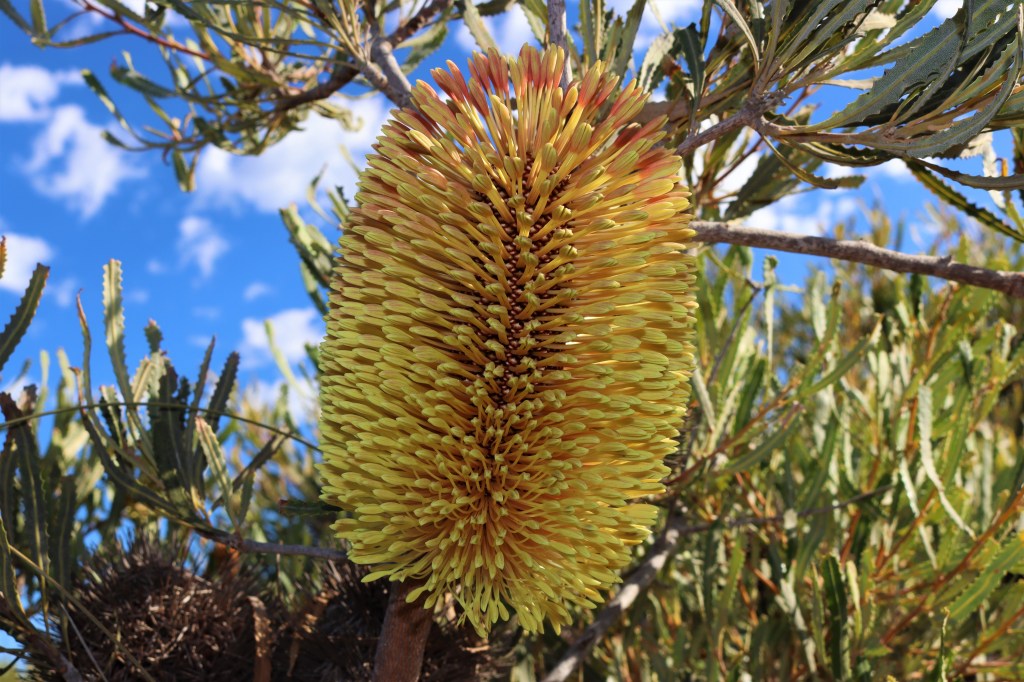
The rigid perianths of Banksia lindleyana lend it the common name of Porcupine Banksia. The ovoid flowers are yellow, but in some individuals the limbs have a lovely pinkish hue. The flowering period of this species continues from January into March. I was delighted to find a Thorny Devil warming on the road, which was carefully removed into nearby bush.
Banksia lindleyana.
The Northwest
In 2024 after 14 years as a hospital pharmacist I moved to the country and returned to the world of community pharmacy. I had obtained a degree of freedom and I was determined to make the most of it, and so in the Winter of 2024, after a 14 year absence, I found myself back in my old stomping ground Northwest of Western Australia, this time locuming in the town of Gascoyne town of Carnarvon.
Banksia hookeriana – The Eneabba Banksia
The 1162km drive from Bridgetown to Carnarvon was made over two days and on the second day, driving the Brand Highway through the mix of agricultural and botanically rich heathlands, there were flashes of colour in the bush North of the town of Eneabba.
Closer investigation found thickets of Banksia hookeriana (also known as the Eneabba Banksia) approaching peak flowering. Similar in appearance to the other orange Banksias, prionotes and burdetti, it is the squatter flowering cone that distinguishes it from the former, while beautiful long, thin upward-pointing leaves make it quite distinct from the latter.
Wandering through the heath, taking a well-earned break from driving, a profusion of White-cheeked Honeyeaters revealed themselves, taking advantage of the abundant nectar supply.
Banksia hookeriana
Point Quobba
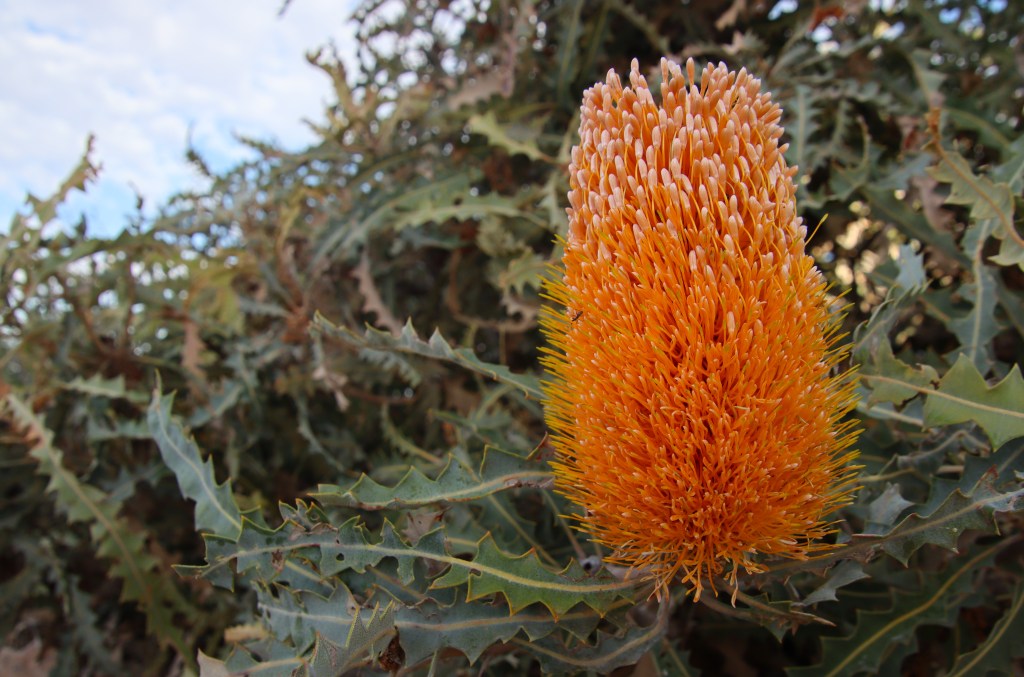
Of all the Banksias that have been introduced to the road verges and gardens of Perth, there is one species that has naturalised well to the nutrient-poor sandy soil and hot Summer temps of the city. It is predominantly a Winter flowering subspecies that originates from the Northwest of the Western Australia.
Indeed, it’s subspecific epithet comes from the Greek borealis (Northern) and skaios (left or West.) It is only this subspecies, and Banksia dentata of the Kimberley Region, that occur outside the Southwest of Western Australia. This Banksia also flowers with a vivid splash of orange, contrasting beautifully with a grey undulating, deeply-lobed foliage. It is one of the two subspecies of Ashbyi’s Banksia…….. Banksia ashbyi subsp boreoscaia.
Within 24 hours of arriving in Carnarvon, I excitedly made the journey out to nearby Point Quobba, the Southernmost point of the range of this species. This Banksia is particularly fond of the crests of sand dunes running parallel to the coast, no doubt an important species for the stability of these dunes.
The Northernmost extremity of the range for this species is the town of Exmouth, at the tip of the Northwest Cape, but outlier populations do also occur inland at Mundatharrda (Kennedy Ranges.)
There were occasional bright orange cones dotted throughout coastal heath, but the flowering was not profuse. The best flower was located in the shade provided by the impressive Quobba Lighthouse.
Banksia ashbyi subsp boreoscaia.
…..and with that photograph it was all over. In the previous 40 months I had photographed 43 of Western Australia’s 62 Banksia species.
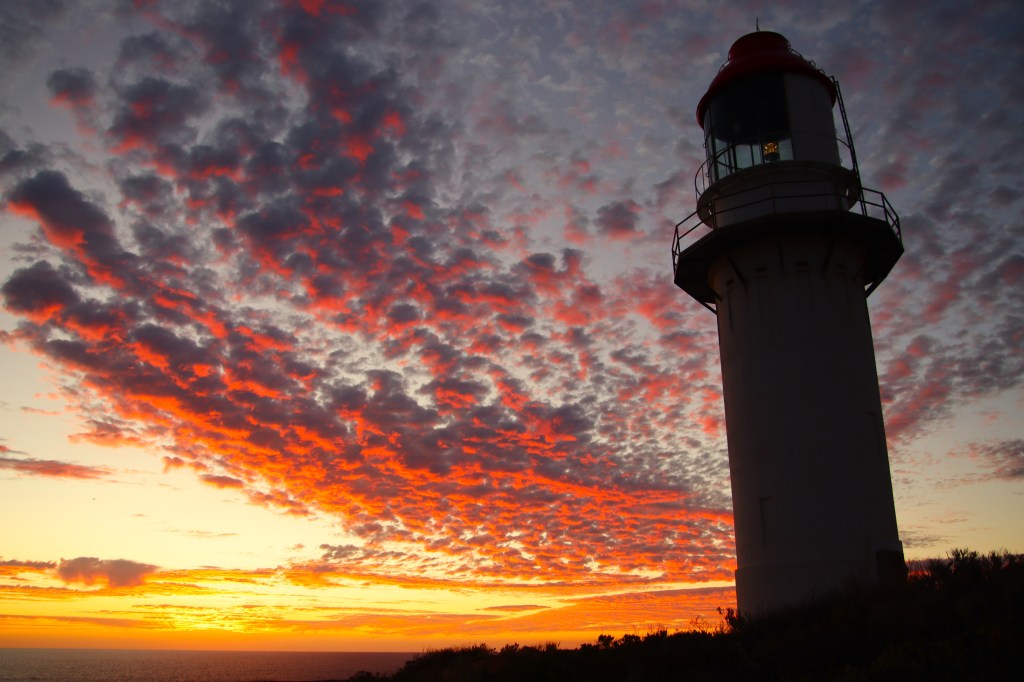
As I sat by the lighthouse on a remote, untouched stretch of Western Australia’s stunning coastline, the power of the mighty Indian Ocean manifested itself with an occasional 20m high spout of water ejected from a fissure in the limestone far below.
In the sky above, a trail of cirrocumulus cloud curved off to the horizon, undersides accentuated with exquisite shades of reds and oranges from the dying sun. It was a most perfect conclusion to a long and fruitful journey viewing the ancient and insanely beautiful Banksias of Western Australia.
Quobba Lighthouse at Sunset.
#QuollingAround
 Quolling Around
I think you must have seen every inch of this great state of ours! You sure get around! I am so loving this banksia series!
LikeLike
Hey Anna, I’ve seen heaps of WA for sure, but there’s always more to see! Thank goodness. I’m glad you have enjoyed the Banksia posts. I was always hesitant to post so many blogs on flora with this being a mainly wildlife and bushwalking blog. But I really wanted to pay homage and I’m glad I have!! Cheers Jimmy
LikeLike
I think your posts are great and relevant – part of bushwalking is enjoying the flora too!!!
LikeLike
Another superb post Jimmy. Fascinating. Well done. I guess I need to make an April trip next time….
LikeLike