
Saturday 3rd February 2024 – Hobart
Continued from:- Tasmania’s South Coast Track
The light plane touched down at Hobart’s Cambridge Airport after 8 days on the spectacular South Coast Track. It had been quite the adventure, but as always it was a welcome return to the creature comforts of civilisation. I checked into Central Hobart YHA for the first shower in over a week, and then crashed for an afternoon nap tucked in the crisp white sheets of the hostel bed.
The evening had been set aside to spotlight at a location within the confines of the city, provided by talented wildlife photographer and friend Adam Fry. Travelling on foot to the South Hobart Reserve I found the usually challenging hills of South Hobart a doddle after traversing the mighty South Cape and Ironbound Ranges!
Hobartians are the luckiest of all Australians for they have a cornicopia of creatures within the city boundaries. The reserve I visited contained Bennett’s Wallabies and Tasmanian Pademelons easily seen and in good numbers. The target marsupial for the night was also around as promised, but timid compared to the larger macropods.
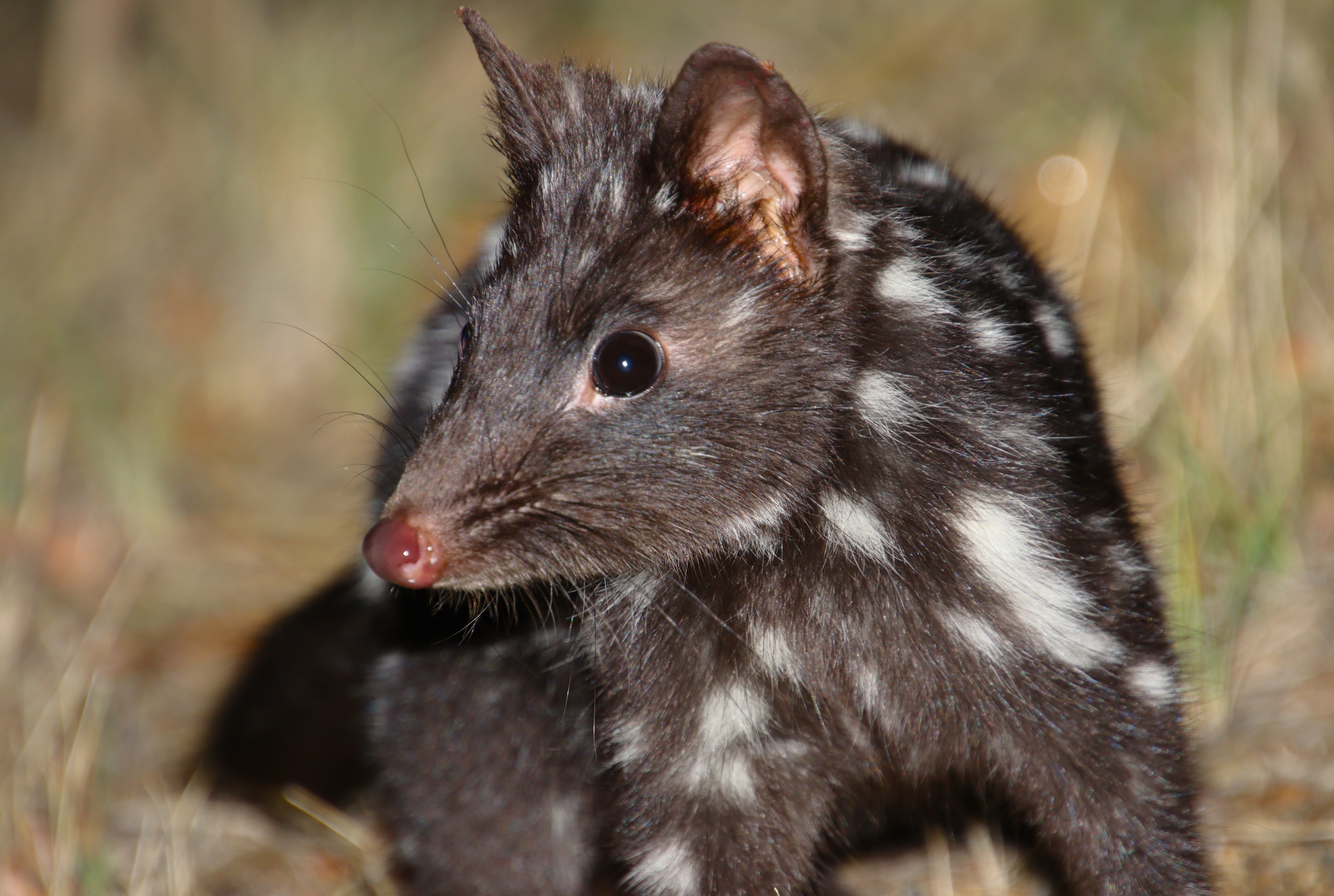
Eastern Barred-bandicoot.
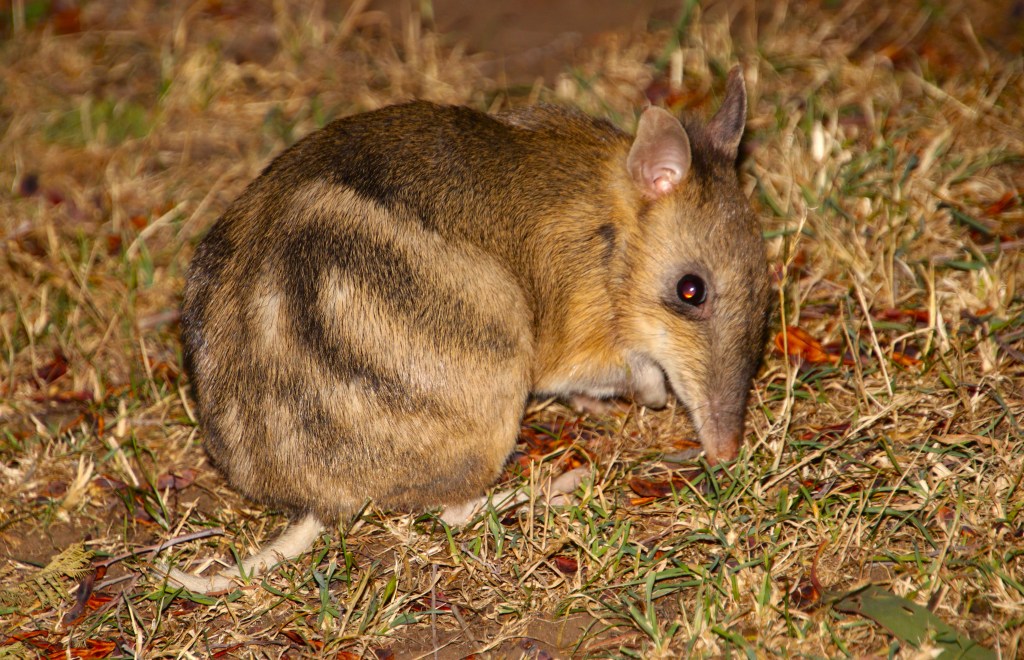
Sadly Tasmania is the last wild stronghold of the Eastern-barred Bandicoot, after foxes and cats have almost extirpated the species on mainland Australia. The Western Barred-bandicoot has suffered the same fate in Western Australia, where it survives solely on a triumvirate of offshore islands, Bernier, Dorre and once again Dirk Hartog.
The Barred-Bandicoots are covered in a sandy pelage with delightfully striped backsides, making them the most attractive of Australia’s Bandicoot species. It is a common misconception that the term Bandicoot is Australian in origin, when in fact it comes from the Telugu dialect of India where pandi-kokku means pig-rat. A misnomer indeed!
Sun 4th February 2024 – Bruny Island
South of Mainland Australia sits the island of Tasmania, itself is surrounded by 300 islands. One island located off Southeast Tasmania is an island of two halves, joined by a narrow isthmus or neck. Mammal species on this island sport peculiar pelts. There are Golden Possums, Snow White Wallabies and Quolls with coats as black as the night itself. Welcome to magical Bruny Island.
Agricultural North Bruny on the left and mountainous Southern Bruny on the distant right.

Bruny Island has played host to a raft of famous explorers. The Dutchman Abel Tasman was the first European to visit in 1642. Then following century saw a blitz of visits by both the English and French. Tobias Furneaux 1773, James Cook 1777, William Bligh 1788, Bruni D’Entrecasteaux 1792, 1793, Matthew Flinders 1798, completed by the 1802 visit of Nicholas Baudin.
The first inhabitants of Bruny, the Nueonne People knew the island as lunawanna-allonah. The term aborigine is from the latin (ab) from, (origine) beginning ie from the beginning. This seems appropriate as they have inhabited Bruny for an astounding 40,000 years, and Australia for over 60,000 years.
Bruny Island’s ferry departs from Kettering on the mainland and takes only 15 minutes to cross the D’entrecasteaux Channel, hardly worth leaving the car! The ferry docks on the Northern half of the island, a 45 minute drive to the main tourist hub at Adventure Bay on the Islands South.
Bruny Island Tasmania – Ferry timetable and how to get to Bruny Island.
I had booked at Adventure Bay for a four night stay on the island. On previous visits to the island I had stayed in relative luxury, but in order to keep costs low on this trip I used the tent I had been carrying for the South Coast Track.
Captain Cook Holiday Park is within spitting distance of the ocean. An unpowered tent site is $30 per night which includes access to the communal kitchen/lounge area. The Adventure Bay General Store is a 5 min walk.
Home – Captain Cook Holiday Park (captaincookpark.com)
As soon as the tent was up I set off to explore the Caravan Park. The weather was overcast with light showers. The lawned area adjacent to Captain Cook Creek was home to grazing Tasmanian Native Hens. A cold afternoon wind encouraged the hens to huddle from the icy blasts.
Tasmanian Native Hens.

This was my third visit to Bruny Island, both previous visits had been short and had coincided with significant rain events. To combat the fickle Tasmanian weather four days were booked on this trip to avoid the chance of prolonged precipitation.
While Bruny lists an impressive mammal list, there were three species I had earmarked as targets to photograph. The first was of course the Eastern Quoll, the second the Long-nosed Potoroo and the third the Brushtail Posssum. It seems strange to be targeting Brushtail Possums, a relatively common marsupial inhabiting large parts of Australia.
Bruny Island’s Brushtails come in an assortment of colours, from the usual silver-grey of the species, to the black Possums of Australia’s colder climes, but on Bruny there also exists an extremely rare population of Golden Brushtail Possums.
A gene mutation translates as a lack of melanin in the skin and fur of these Brushtails resulting in a golden colouration. The phenomenon occurs throughout Brushtail Possum populations, but survival rates of these brightly-coloured Possums elsewhere is low due to predation. Predator free Bruny Island allows this unusual colour morph to flourish.
On previous visits, Bruny’s Northern half had proved best for the above wildlife. The weather on that first night was disappointing with light showers drifting across the island as I made the 40 minute drive North. Cursing my luck I slowly drove Bruny Island Main Rd. Passing through farmland North of Great Bay things took an interesting turn when a Golden Brushtail Possum ambled across the road.
I stopped the car and shadowed the Possum into roadside vegetation where it climbed a low tree. Wow, at last the chance to properly observe a Golden Brushtail. It was not only the golden fur that was remarkable but also red coloured eyes. The Possum had been in a recent altercation evidenced by a series of facial scratches.
Golden Brushtail Possum.

Delighted to have found what was certainly the most difficult target, I continued North to the the junction of Missionary and Lennon Rds, an area I was to concentrate on for the time on Bruny, The light rain however intensified, and I was forced to spend the remainder of that first night spotlighting from the car.
The vehicular spotlighting route on North Bruny was roughly rectangular, Starting on Lennon Road, and then heading North on Missionary Rd to the Barnes Bay settlement, before continuing East along Church Road before returning to Bruny Island Main Rd.
Although the rain was constant I did manage to see both morphs of Eastern Quoll as well as Long-nosed Potoroo before admitting defeat and returning to Adventure Bay.
Monday 5th February 2024 – Bruny Island
I woke to another chilly, overcast morning, but at least the rain had stopped. That morning I travelled to the Southwest corner of the island to visit Cape Bruny Lighthouse. On the 14km of unsealed road approaching the lighthouse an overzealous driver had rolled a 4WD. Although the road appeared closed emergency services waved me past, and fortunately no-one appeared badly injured.
The impressive lighthouse towers 114m above already dramatic sea cliffs with superlative views. It was built to guide ships travelling from to Australia’s East Coast but avoiding the dangerous Bass Strait passage. It is famous for hosting Australia’s longest serving lighthouse keeper who lived at Cape Bruny Lighthouse for almost 38 years.
Cape Bruny Lighthouse.

On the return trip to Adventure Bay I stopped for lunch at Hotel Bruny, the islands sole pub. Wait times for food can be notoriously long at this establishment, so I was pleased to arrive immediately before a bus of hungry day trippers.
The afternoon was spent hanging out at the Caravan Park, where it was apparent that European Rabbits were not only abundant but also quite habituated to humans.
The European Rabbit was introduced to Australia with the first fleet, although the subsequent plague that devastated the continent can be attributed to one Thomas Austin, member of the acclimitisation society of Australia who released 24 rabbits onto his property for shooting ( eye roll. ) A recent genomic study has confirmed that Australia’s feral rabbit plague derives entirely from this population.
Rabbits are voracious feeders of native plants, exposing the fragile topsoil of the continent. Evidenced at places like Eucla on the SA / WA Border, where sand dunes are devouring the original settlement and telegraph station.
Once established, Rabbits become an unstoppable tidal wave outcompeting all similar mammals. At 31 days the gestation period is one of the shortest of the eutherian mammals, and maturity is reached after a mere three months. Females mate within an hour of birth and produce upto 8 kits per litter, and upto 8 litters per year. Currently, the only positive currently is the food source they provide for predators such as Monitor Lizards and Wedge-tailed Eagles.
European Rabbit.

Introduced Rabbits were not the only mammal seen that afternoon on the caravan park grounds, because later a Rufous-bellied Pademelon crept out from the undergrowth and began grazing the grassed area adjacent to the creek.
The Rufous-bellied Pademelon is now found exclusively in Tasmania after being extirpated from the mainland by introduced predators. It is one of three Pademelon species in Australia, the other two being the Red-legged and Red-necked Pademelons of Northern NSW and Queensland.
Rufous-bellied Pademelon.

The previous night on the drive to North Bruny I fastidiously kept speed under 40kph. This proved astute after near misses with both a Pademelon and Bennetts Wallaby. Considering these near accidents, I chose to drive before dark to North Bruny on subsequent nights to reduce the probability of wildlife collision.
This meant time to sit and enjoy the last hour of daylight on Lennon Rd, where the impressive silhouette of Kunanyi (Mt Wellington) stood proud to the North. In the sky cumulus clouds danced orange, pink and finally red in the last light of the dying day.
Dark had barely descended before rustlings in the roadside bracken revealed imminent company. On all three nights Eastern Quolls (both morphs,) Long-nosed Potoroos and of course Brushtail Possums were seen at this fabulous location.
The coats of Eastern Quolls are usually fawn outnumbering the black morph by three to one, although this was not my experience. I found the two in more or less equal numbers, perhaps with slighty more of the fawn Morph. Both colours are beautiful, but the dapper dark coat of the black morph contrasting sharply with the exqusite white spots makes it my favourite.
Eastern Quoll – Dark Morph

There are four species of Quoll in Australia with two found in Tasmania. These are the Spotted-tailed Quoll and the Eastern Quoll, although only the latter is found on Bruny.
The distinguishing features of the two Tasmanian Quolls are the larger size of the Spotted-tailed Quoll and the lack of spots on the tail of the Eastern Quoll. The habitats also differ with sclerophyll forest being the domain of the Eastern Quoll while the Spotted-tailed Quoll is an inhabitant of wetter forest.
Eastern Quoll – Fawn Morph, showing the lack of tail spots.
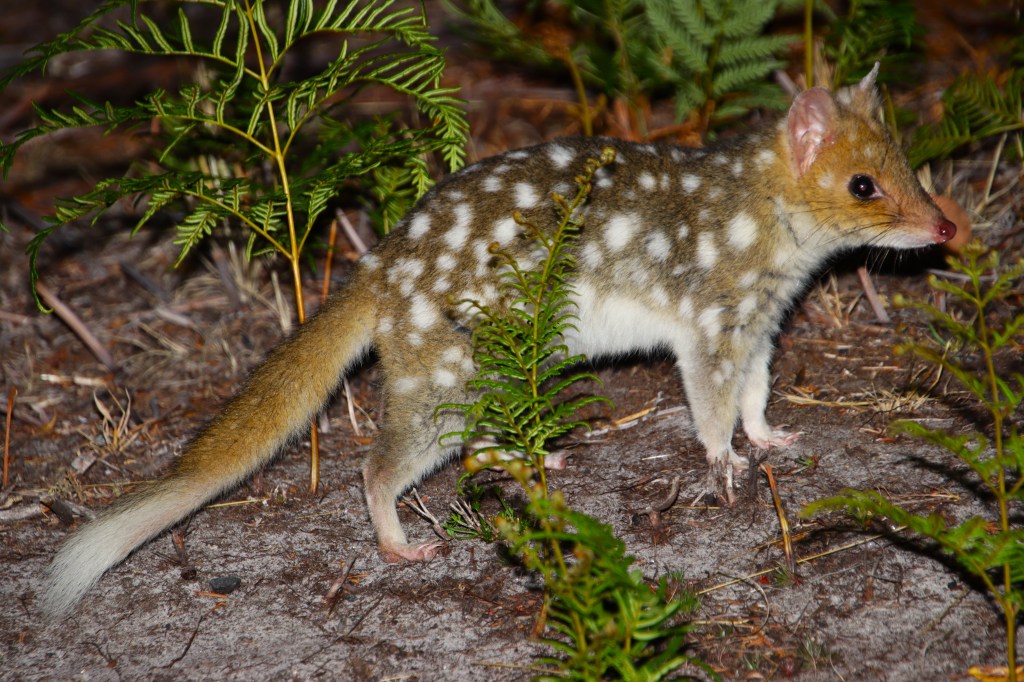
It seems strange that agricultural North Bruny should host the larger number of Eastern Quolls, when the South of the island has more land devoted to National Parks. Indeed the Quolls of North Bruny are most often encountered on or adjacent to farmland. The clue to this comes from diet, for Eastern Quolls are voracious predators of Cockchafer and Corbie Grubs.
In addition to invertebrates, Eastern Quolls will also take reptiles, small mammals and birds and are opporuntunistic scavengers of larger mammal carcasses. Indeed on a previous visit to Bruny, I witnesses an Eastern Quoll feeding on another Eastern Quoll, that had recently become victim to vehicle strike.
In common with other marsupials there are more young born than there are teats, and so it really is a survival of the fittest from birth. In the case of the Eastern Quoll twenty are born to only six teats. Numbers are greatest over Summer after dispersal of the young.
Some Quoll species are partly arboreal, but not Eastern Quolls who in my experience are always on the ground. This behaviour can be attributed to a lack of introduced predators, with cat control well established on Bruny. Eastern Quolls can be a shy species under the spolight, but also demostrate a playful and feisty side. Their moist pink noses are utterly delightful.
Eastern Quoll – Dark Morph.

It was approaching midnight when the cautious drive was made back to South Bruny. I had brought the thermal imager to Tasmania and scanned the Silver Banksia (Banksia marginata) prolific in the roadside vegetation of the neck.
Driving at walking speed on the now deserted road, the imager picked up a number of Eastern Pygmy Possums feeding on Banksia nectar and insects. Unfortunately, they were always too deep in the vegetation to photograph, but brief views under the spotlight were possible.
Tuesday 6th February 2024 – Bruny Island
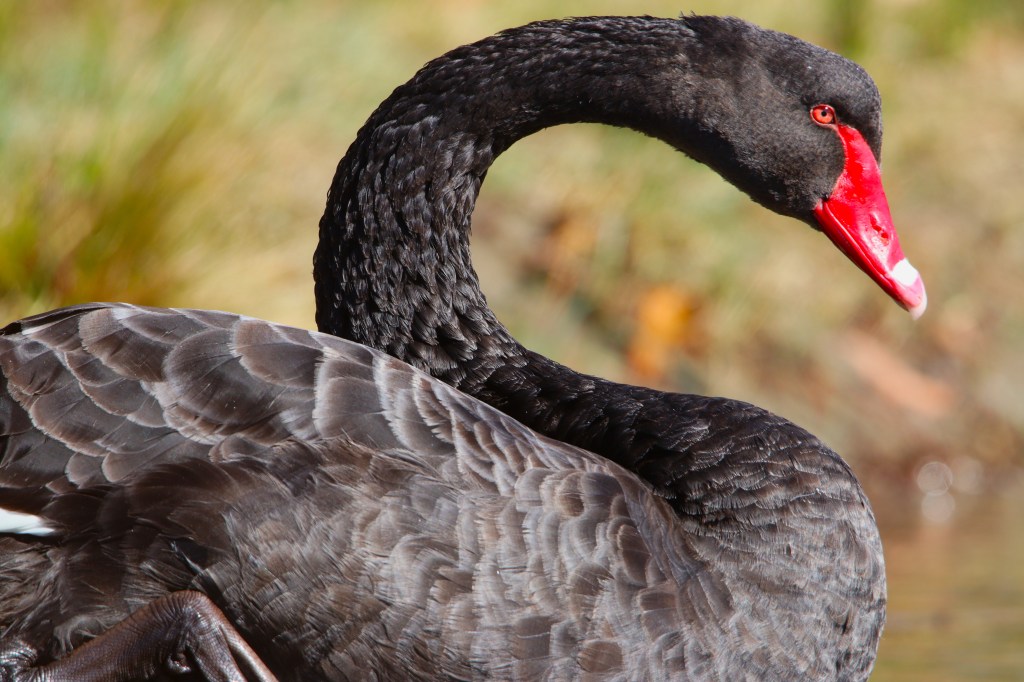
I woke to bright sunshine the following morning, perfect for a beachwalk. Perched on sandbank at the mouth of Captain Cook Creek was a graceful Black Swan. The first European sailors on Bruny who being used to the White Swans of the Northern Hemisphere would have considered these Swans with suspicion. Black being the colour of witchcraft.
Black Swan.
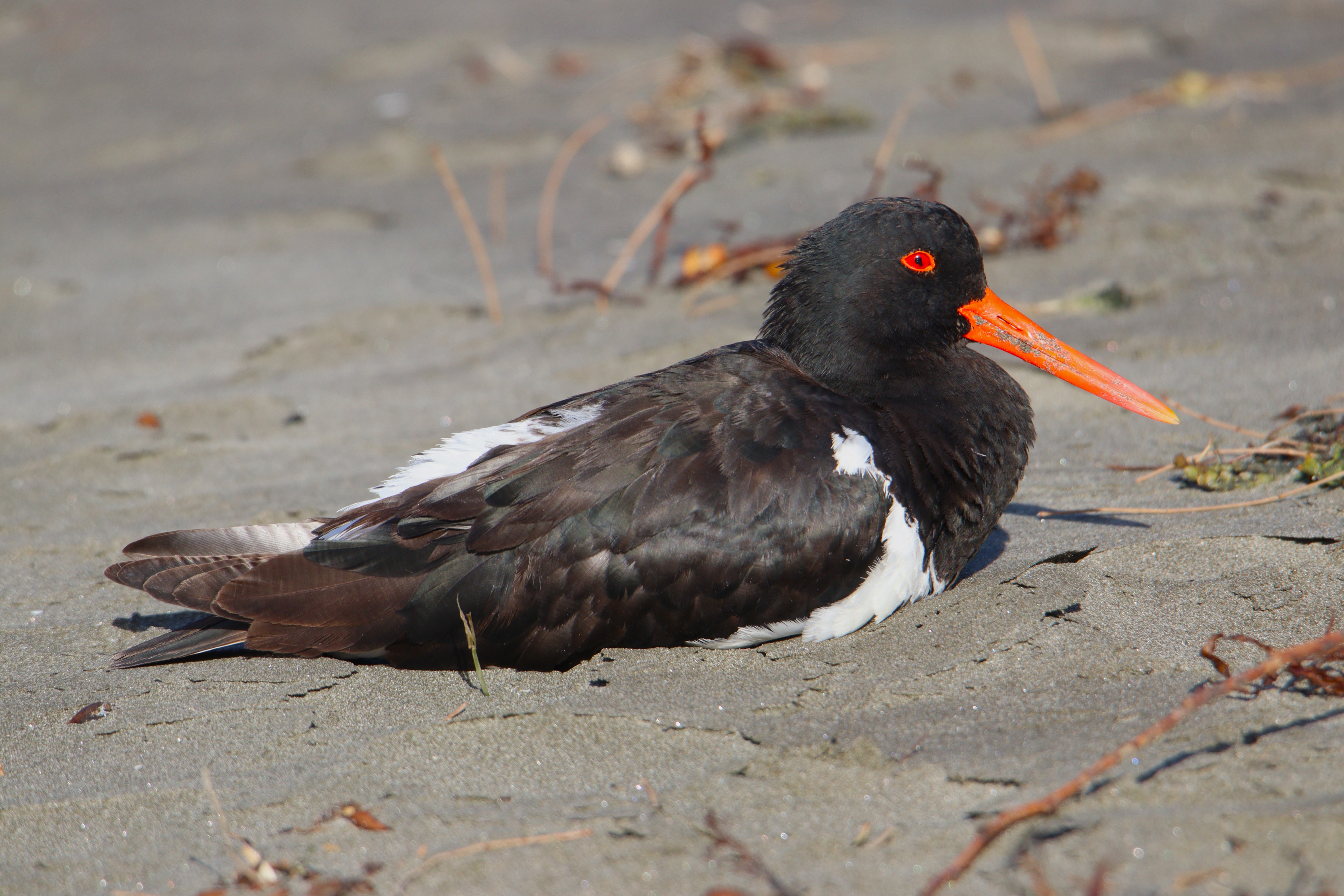
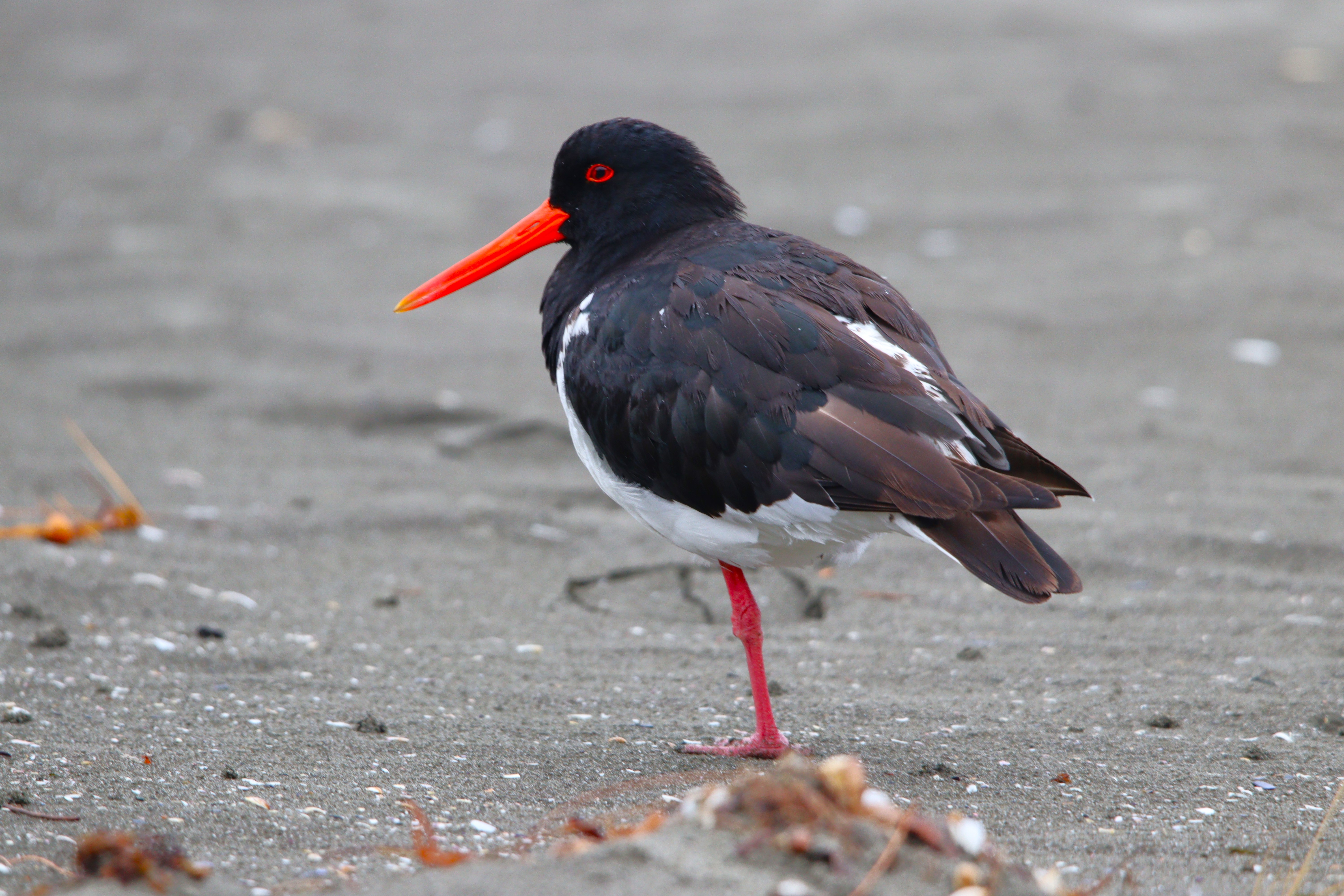
It turned into a morning for the birds. At the Southern end of Adventure Bay a pair of Pied Oystercatchers were running back and forth with the tide, feasting on exposed molluscs, small fish and worms. The birds were quite confiding here, unlike those on the South Coast Track that would fly off on approach.
Pied Oystercatchers.

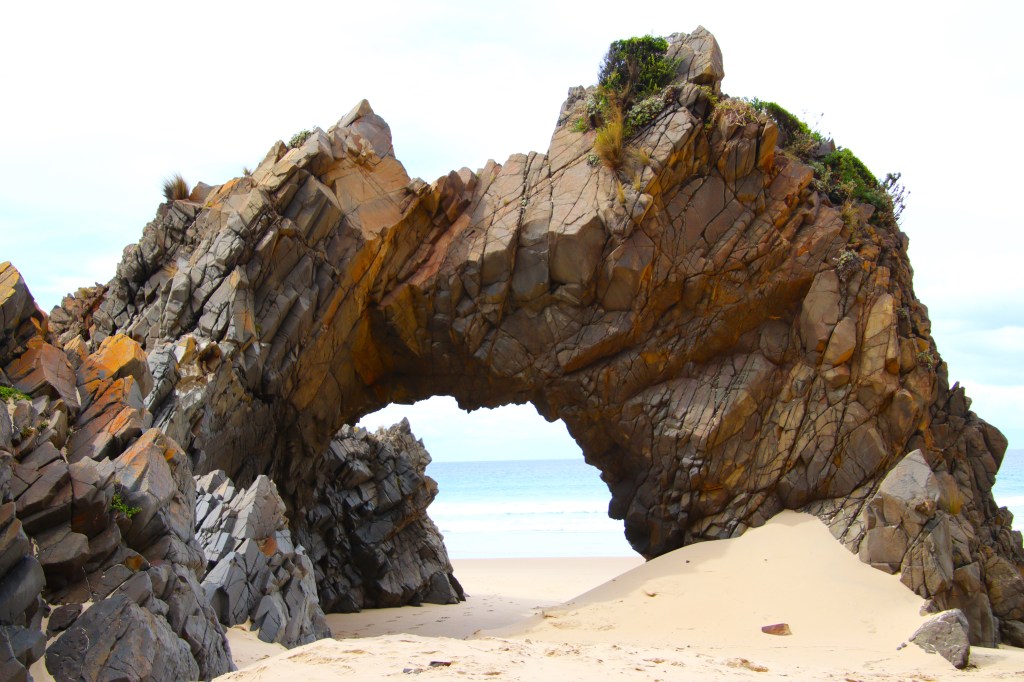
Late that morning I drove North of the neck and walked the Cape Queen Elizabeth Track. The walk is a fabulous hike passing through coastal heath to the ocean. I walked as far as Mars Bluff where a spectacular rock arch rose majestically from the sand.
Rock Arch – Mars Bluff.
The walk back to the car was filled with thoughts of Oysters served at the nearby Get Shucked Oyster Bar (great name btw!) It would be remiss of me to visit Bruny Island and not indulge in the islands most famous produce, so the drive was made to Great Bay, where the best part of an hour was spend demolishing 2 dozen delicious Oysters!


I spent afternoon sleeping off the oysters back in the tent, before rising to photograph the most famous of Bruny Island’s abundant wildlife.
The White Wallabies of Adventure Bay are in fact Albino Bennett’s Wallabies whose usual colour is brown. In common with many macropods they emerge from the undergrowth late afternoon to feed.
When searching for these Wallabies it is best to drive the back streets of Adventure Bay, where they can be easily found grazing on the private properties on Lockleys Rd, Francis Lane and Hayes Road. They are best photographed from the public roads, unless permission is sought to enter a private property.
White Wallaby.

Tasmania’s Summer evenings are long due to the proximity of the island to the South Pole, so there plenty of daylight left to drive to the intersection on Lennon and Missionary Rds, where once again I sat out the last hour of daylight.
The Long-nosed Potoroo was usually the first marsupial to emerge from bracken in the surrounding fields. The dense ground cover bracken provides is important shelter for Potoroos during the day, making it a good place to start when searching for the species.
Long-nosed Potoroo.
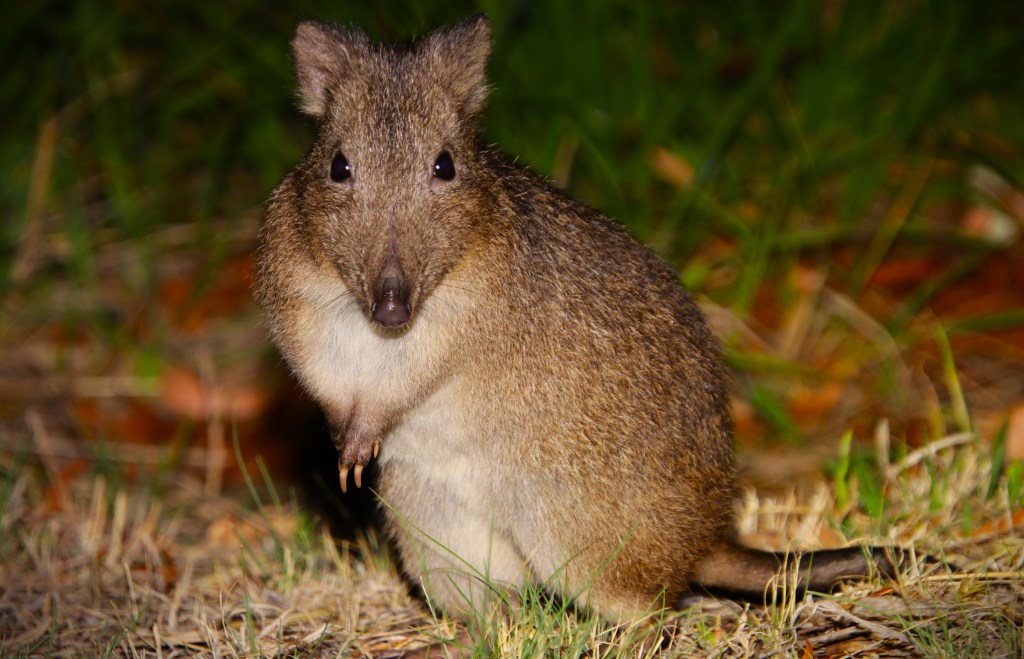
Long-nosed Potoroo distribution is scattered along the coastal strip from Southeast Queensland to Victoria, and of course Tasmania. The nose length of a Long-nosed Potoroo is dependant on latitude, with animals further South having longer noses. Bruny Island being the Southernmost limit of distribution, Tasmanian Potoroos are blessed with impressive snouts.
Long-nosed Potoroo.
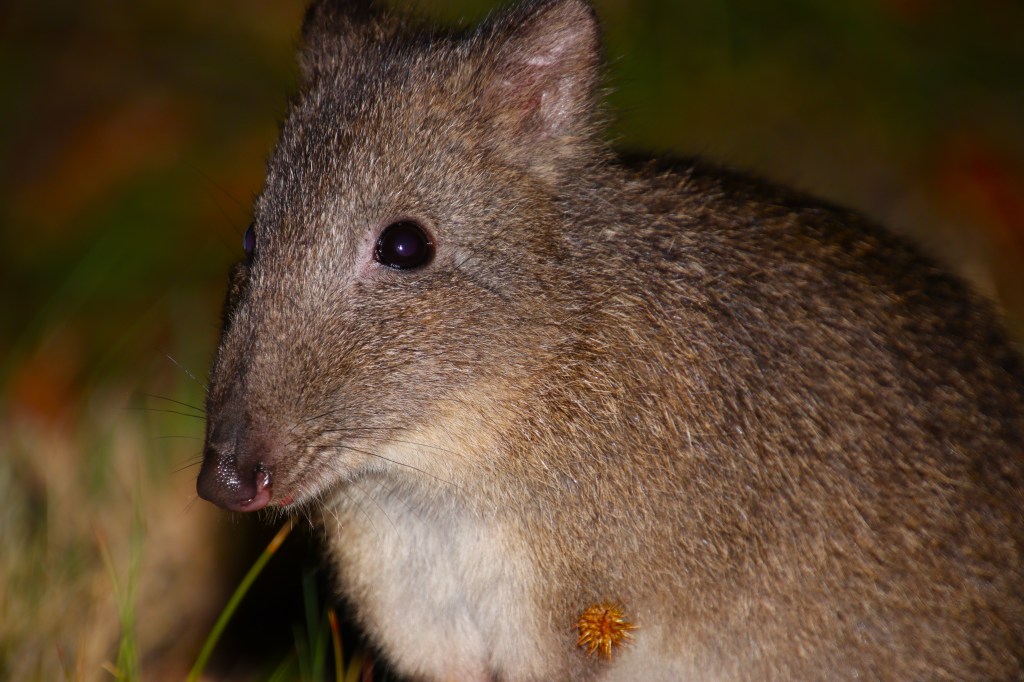
After 10pm I spotlighted from the car along Missionary Rd, where it was dissapointing to encounter a feral cat skulking into the bush. At the settlement of Barnes Bay, Long-nosed Potoroos were easily seen feeding on the lawns of properties, with sightings continuing onto Church and North Bruny Main Rds.
In addition to adults there was an occasional and rather delightful juvenile Potoroo, which lack the longer nose of adults. Potoroos breed year round and have the distinction of the longest marsupial gestation at 38 days.
Juvenile Long-nosed Potoroo.

On the return journey to Adventure Bay around midnight the absent moon was once again great for Eastern Pygmy Possum activity on Banksia marginata at the neck.
Wednesday 7th February 2024 – Bruny Island
The last day on Bruny had arrived and as I lay in the tent toastily warmed by the early morning sun, the high-pitched tinkling Fairy Wrens surrounded the tent.
Inspired by nature, I made the short drive to the Southern end of Adventure Bay to the start of the Fluted Cape Walk. A five and half kilometre circular walk ascends the steep coastal cliffs of Fluted Cape before descending through magnificent dry schlerophyll forest to return to Adventure Bay.
It is a challenging walk with a big climb, but the view of the sheer dolorite cliff faces of Fluted Cape make the effort worthwhile. The sea cliffs are Australia’s highest at 270m, the scale is demonstrated well in the photo below with a bobbing boat at the base of the cliffs.
Fluted Cape.

The descent through the forest to Adventure Bay is via a series of switchbacks beneath towering blue gums. The gentle silence of the forest was interrupted as a small flock of Yellow-tailed Black Cockatoos passed over stopping to feed on the abundant gum nuts of the canopy.
Yellow-tailed Black Cockatoo.

Underneath the Cockatoos within a grove of she-oak and sedge was a small mob of Bennetts Wallaby. Unlike the Albino Wallabies of Adventure Bay these wallabies were the typical brown of the species.
Juvenile Bennetts Wallaby.

I spent the entirety of the last night on North Bruny walking Lennon Rd, which is almost devoid of traffic once the ferries have ceased. There were many Eastern Quolls, and short sharp shrieks of conflict were a common sound from surrounding fields.
Eastern Quoll.
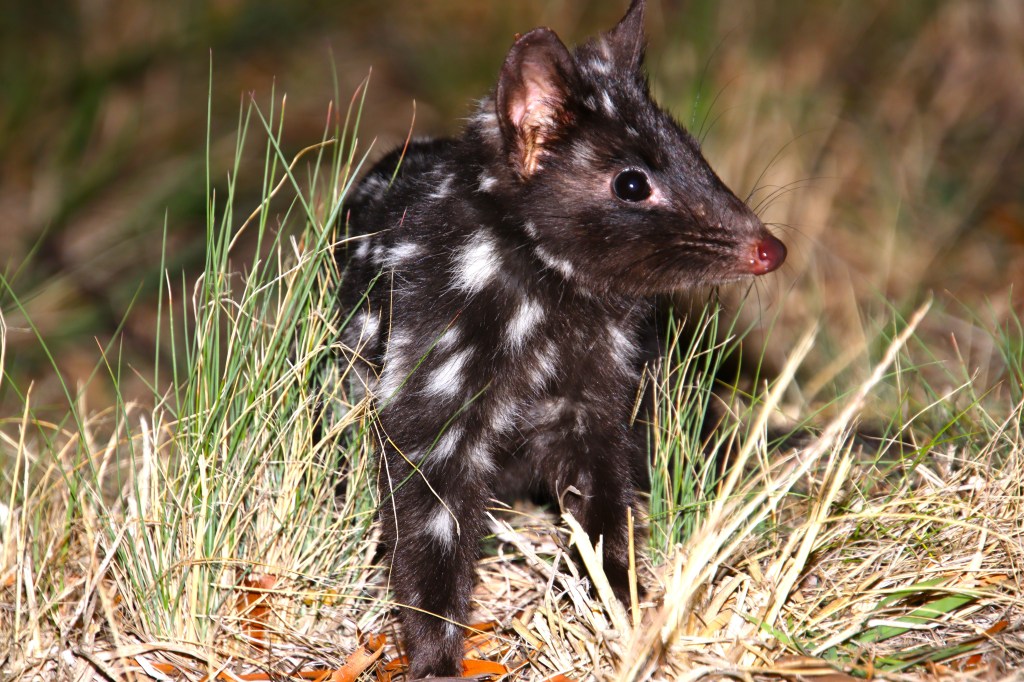
It was a wonderful last night, with not only Eastern Quolls, but once again Long-nosed Potoroos and of course lots of woolly black Brushtail Possums.
The return drive to Adventure Bay involved a near miss. A black Possum was ambling away from the car in the centre of the road. The absent eyeshine and the black colour blended it well with the tarmac….. I stopped just in time. A reminder to every motorist on Bruny that after dark slow speed is an absolute necessity.
Lucky Brushtail Possum.
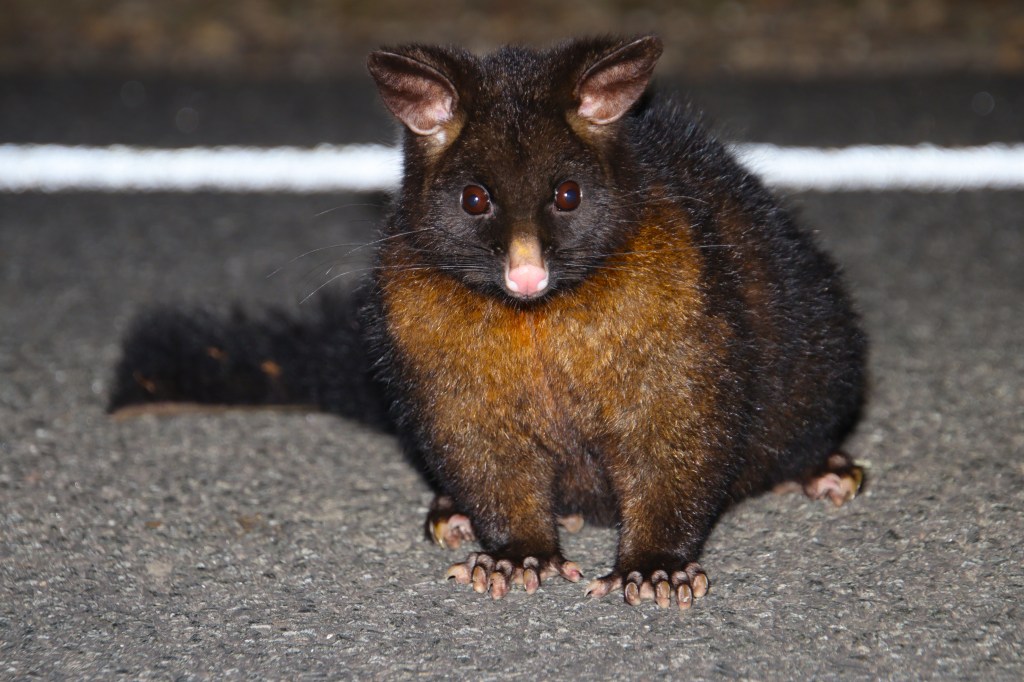
The night was rounded off with an Eastern Quoll South of the neck. The first time I have seen the species on South Bruny.
Thurs 8th February. Mount Field NP.
After four late nights spotlighting wonderful Bruny Island I enjoyed a long lie-in before striking camp. The drive to Mt field National Park takes three hours from Bruny including a coffee break in Hobart en-route.
Mt Field is my absolute favourite place in Tasmania and I always include a stop on any visit to the island. The National Park Hotel has always been my go to pace to stay, but now under new ownership it is no longer offers accomodation.
Fortunately Russell Falls Holiday Cottages are right on the doorstep of the National Park. The accommodation is a series of four cottages with lovely caretakers onsite. The cottage was practical, comfortable and priced reasonably, while spacious grounds contain a large lawned area with frontage on the Tyenna River with Platypus spotting a possibility.
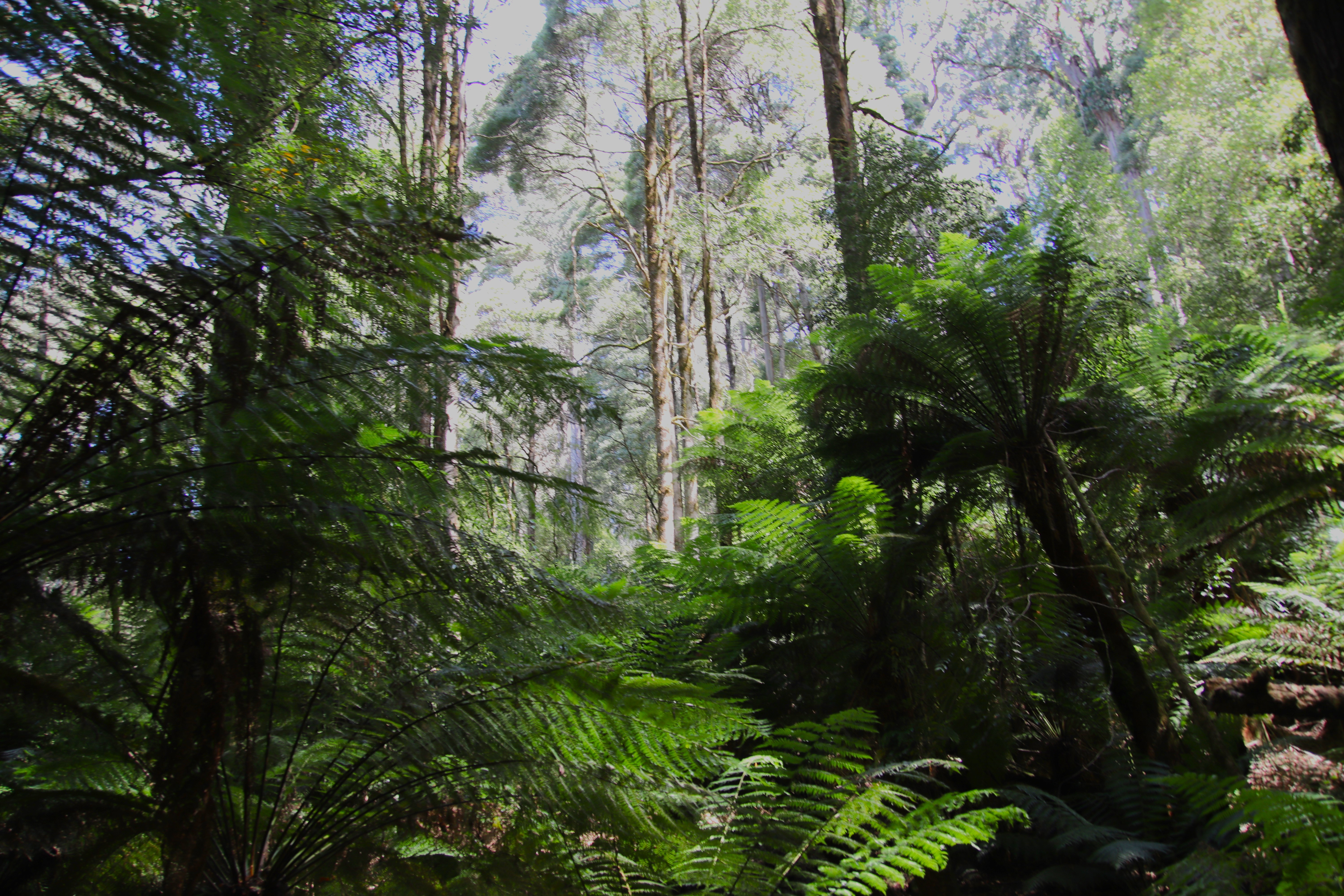
I arrived around midday, too early for check-in, and so made the 200m drive to the Mt Field Visitor Centre, parked the car and set off on the Three Falls Circuit in perfect Tasmanian sunshine. The 6km trail meanders through enormous Eucalyptus regnans forest peppered with tranquil waterfalls.
The first waterfall on the circuit is Russell Falls, a stunningly beautiful multi-tiered waterfall girt with tree ferns and rainforest trees in every shade of green. A gentle breeze generated by falling water rippled through the surrounding vegetation.
Stunning Russell Falls.

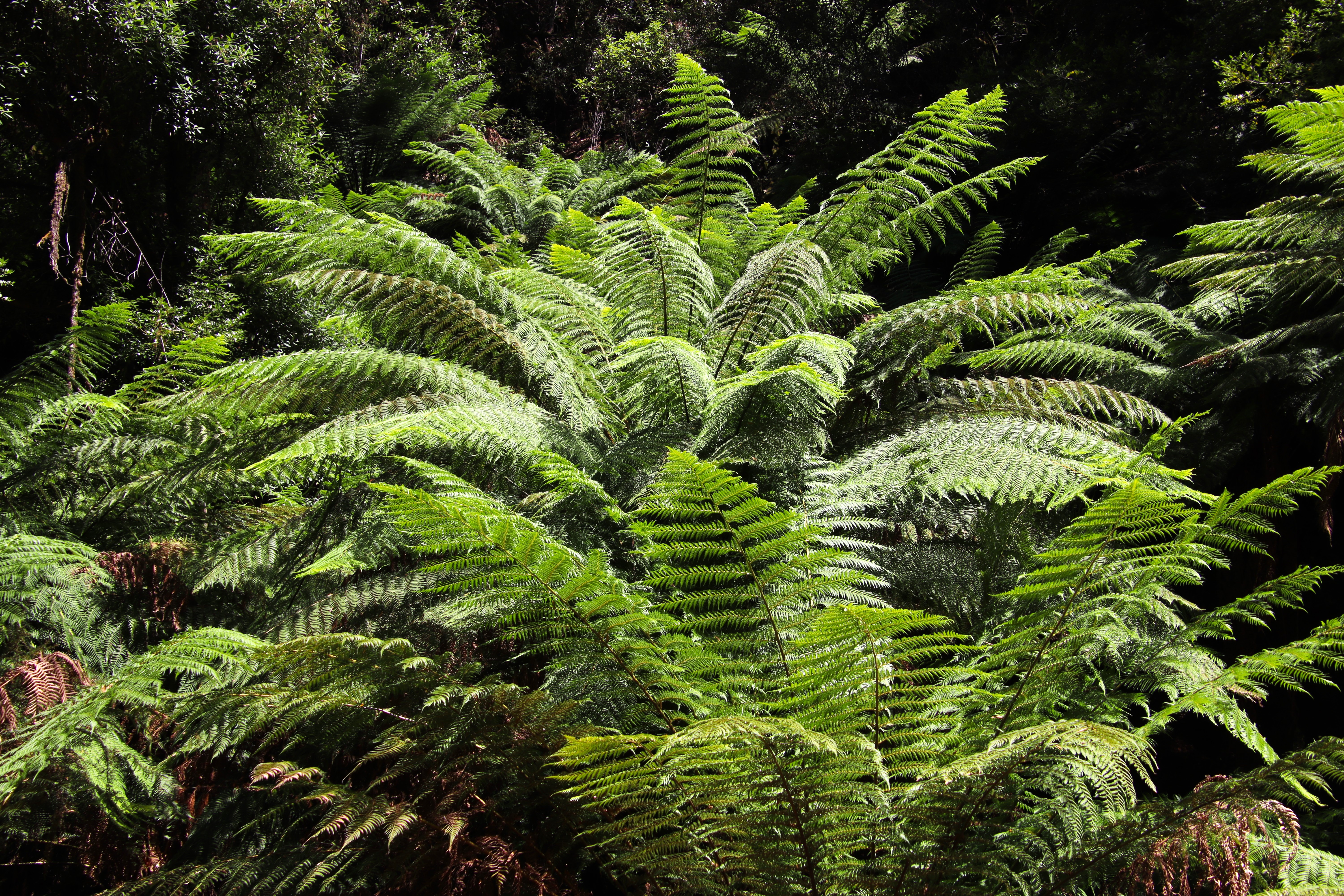
The climb to Horseshoe Falls is a hard one before the track passes beneath the largest flowering plant on planet earth. Eucalyptus regnans also known as Swamp Gums grow to 100m, these are the same species as Victoria’s Mountain Ash. Beneath these giants are creeks choking with verdant green Giant Tree Ferns (Dicksonia antartica.) Everything in this wet forest is green, even dead logs littering the forest floor are dripping in litchen and mosses.
Three Falls Circuit.


Three Echidnas were out and about that afternoon, flushed out by the warm conditions. It is the commotion of these voracious, insect-feeding, mini-bulldozers ploughing through leaf litter that often divulges their location.
Echidna.

After checking in at Russell Falls Cottages and unpacking, I had a wander through the grounds. Birds were plentiful, while at the riverside the caretakers had thoughtfully positioned two wooden deck chairs on the flat rocks. I spent a lazy hour scanning the river for Platypus before succumbing to sleep, hypnotised by the lethargic waters. The late nights finally catching up.
Scarlet Robin.

Russell Falls Cottages are perfectly located to spotlight Mt Field. It takes one minute to walk from the cottage to the grounds on the National Park. On all three nights the same suite of mammals were seen.
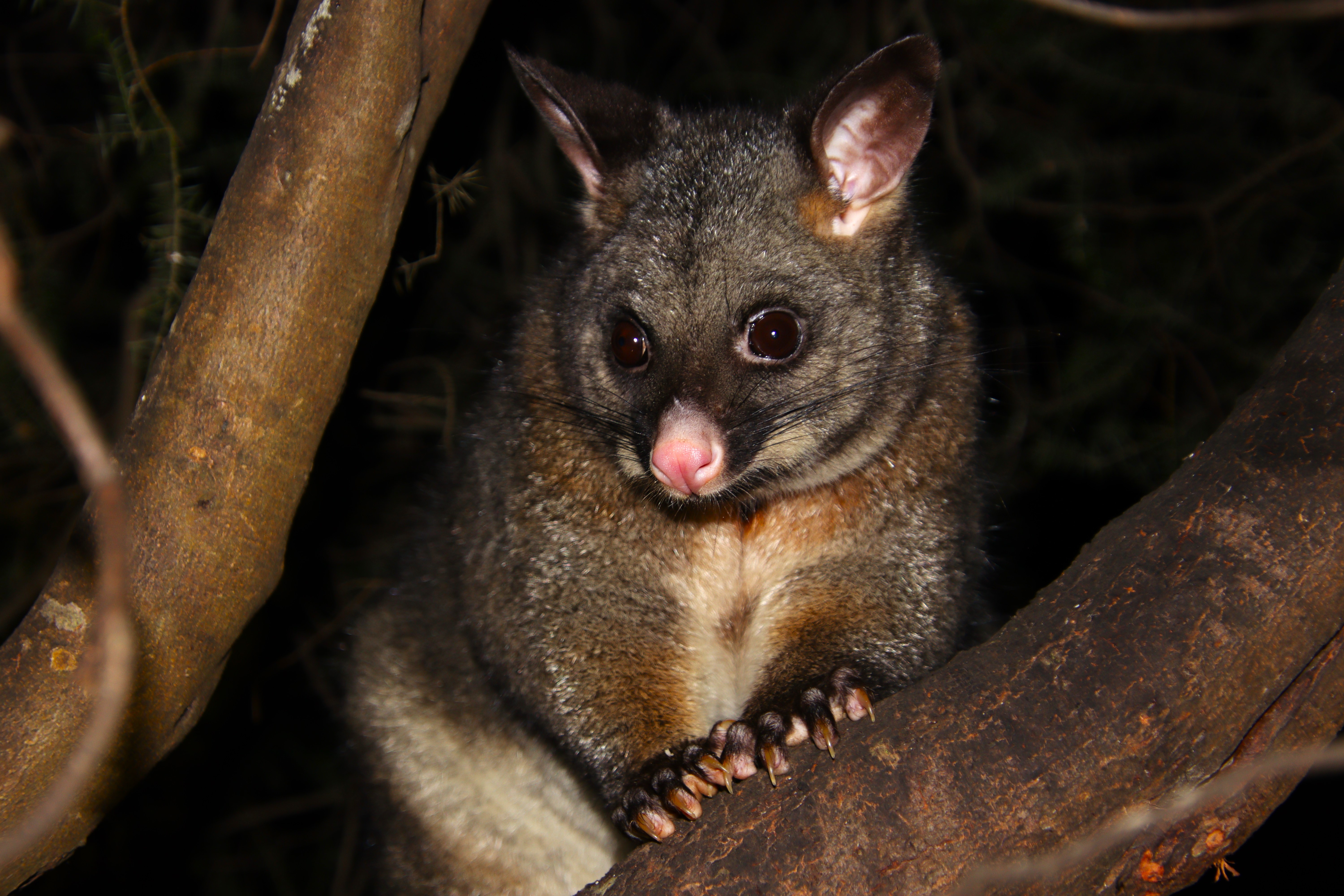
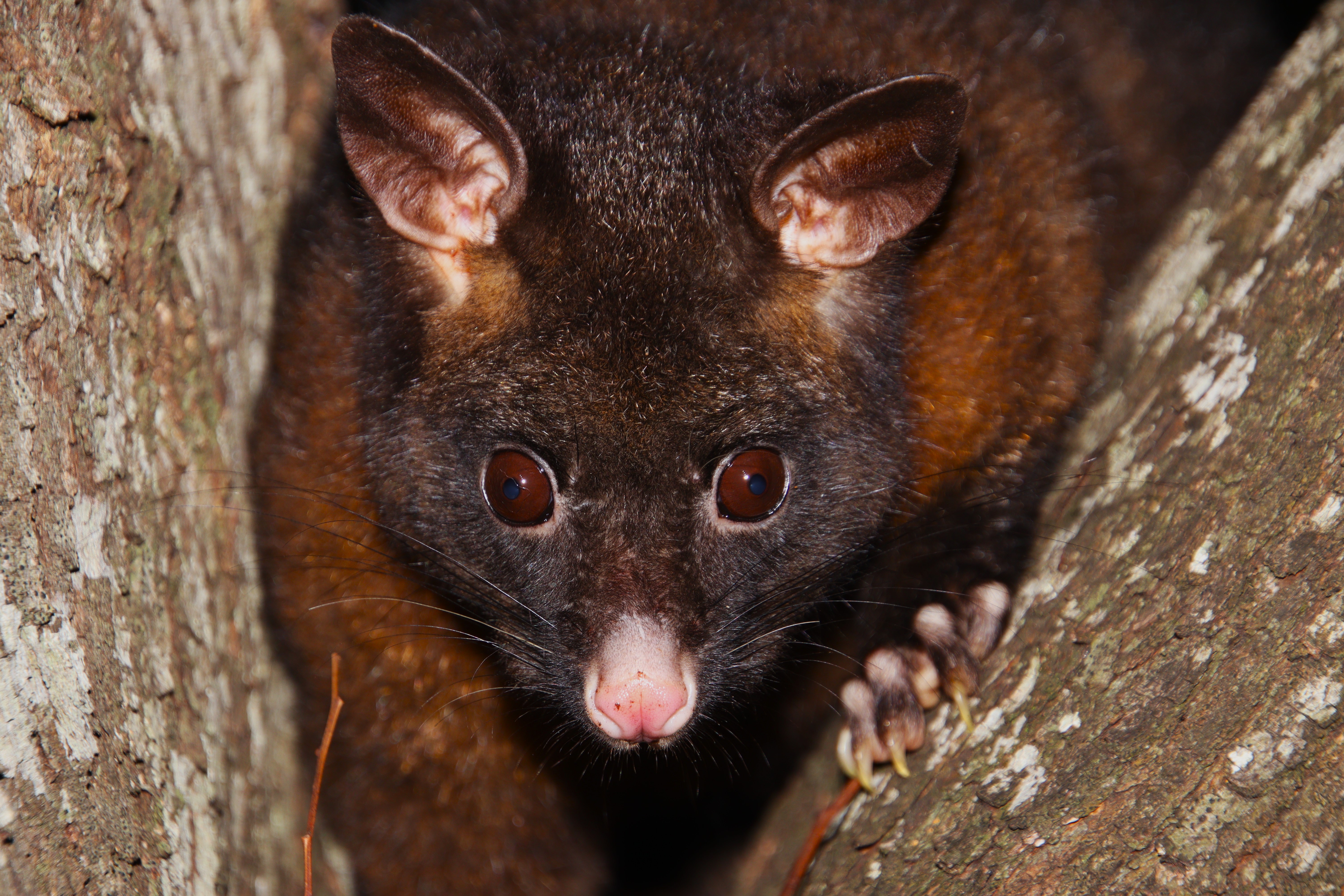
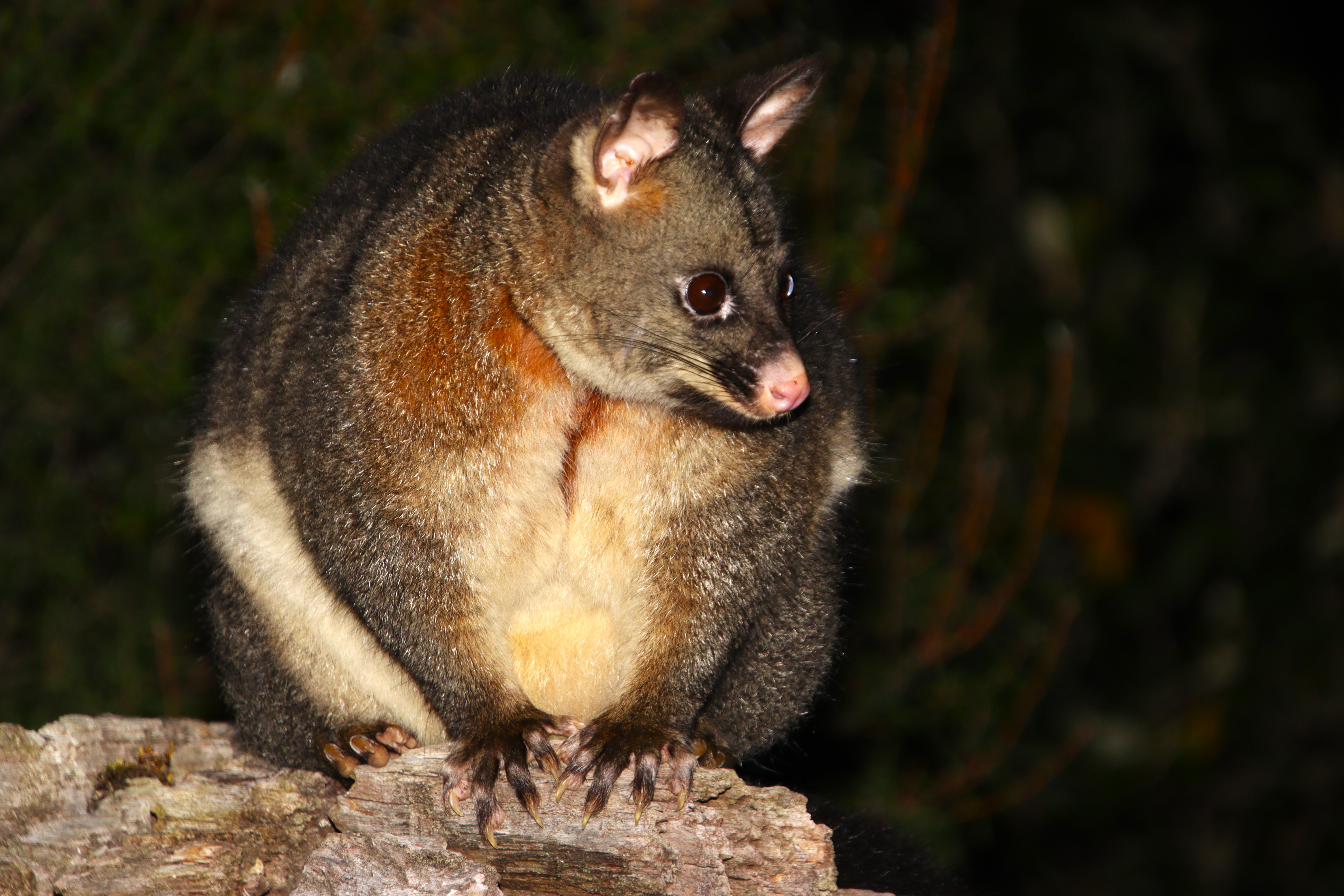
Immediately after darkness had descended the lawned area in front of the Visitor Centre contained mobs of Pademelons. The trees on the periphery are packed with Brushtail Possums, browsing the foliage, plodding around, or perched in a tree fork.
Brushtail Possums come in two colours at Mt Field. Grey is the common colour of Brushtails across Australia but Tasmanian greys have a distinctly thicker coat. Black Brushtails are more prevalent in the colder climes of Tasmania and the higher altitudes of the Great Dividing Range, where the black colouration is an adaptation to the cold.
At certain times of the year the chests of these Possums are discoloured by oily secretions and Possums can be seen rubbing chests on branches to disperse this scent.
Brushtail Possums.

Spotlighting the majestic River Gums lining the Tyenna River, eyeshine from a high bough revealed an Eastern Ringtail Possum, the first time I had seen this species at Mt Field. Ringtail Possums are gentle compared to the bolder Brushtails. Once my eye was in with the species, they were also located in riverine trees at Russell Falls Cottages.
Eastern Ringtail Possum.

Eastern-barred Bandicoots are a highlight of Mt Field. Previous visits had diclosed this Bandicoot digging for grubs and bulbs on the grassed area, but on this visit they were almost exclusively encountered on the swampy ground and sedges between the park gate and Visitor Centre.
Eastern Barred-bandicoot.

A marvellous aspect of Mt Field is the easy access to the alpine region. Lake Dobson Rd twists and turns through magnificent eucalpyt forest underscored with tree ferns. Emerging from the forest the gravel road climbs between tumbling rock screes into the brisk, invigourating clean air of the high country.
The walking trail around Lake Dobson is through a unique array of unusual plants. Brightly coloured pink mountain berries cover thick clumps of moss, while wispy litchens hang from branches like old mens beards. Palm-like trees (Richea pandanifolia) are present almost tropical in appearance.
Delightful Lake Dobson.
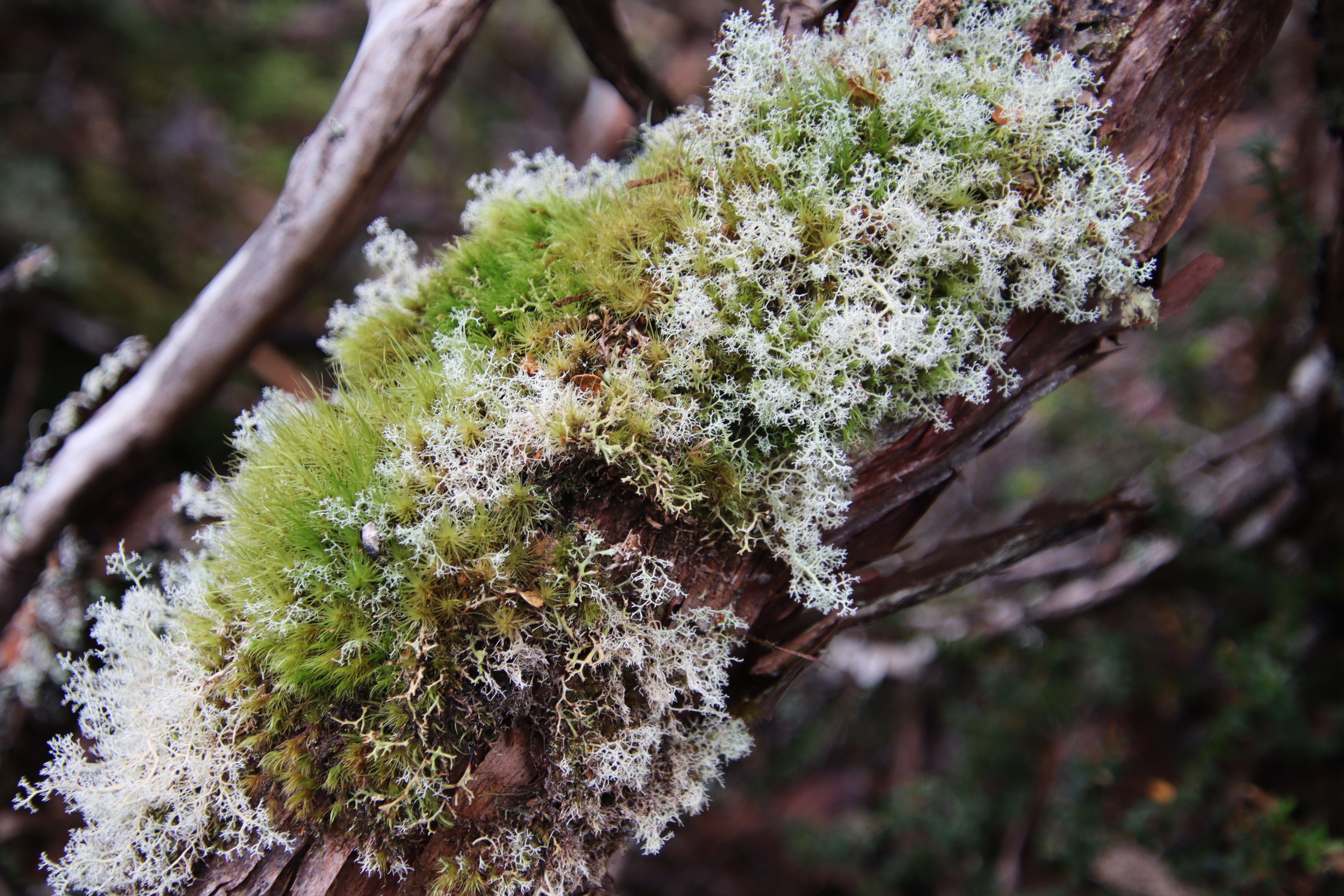

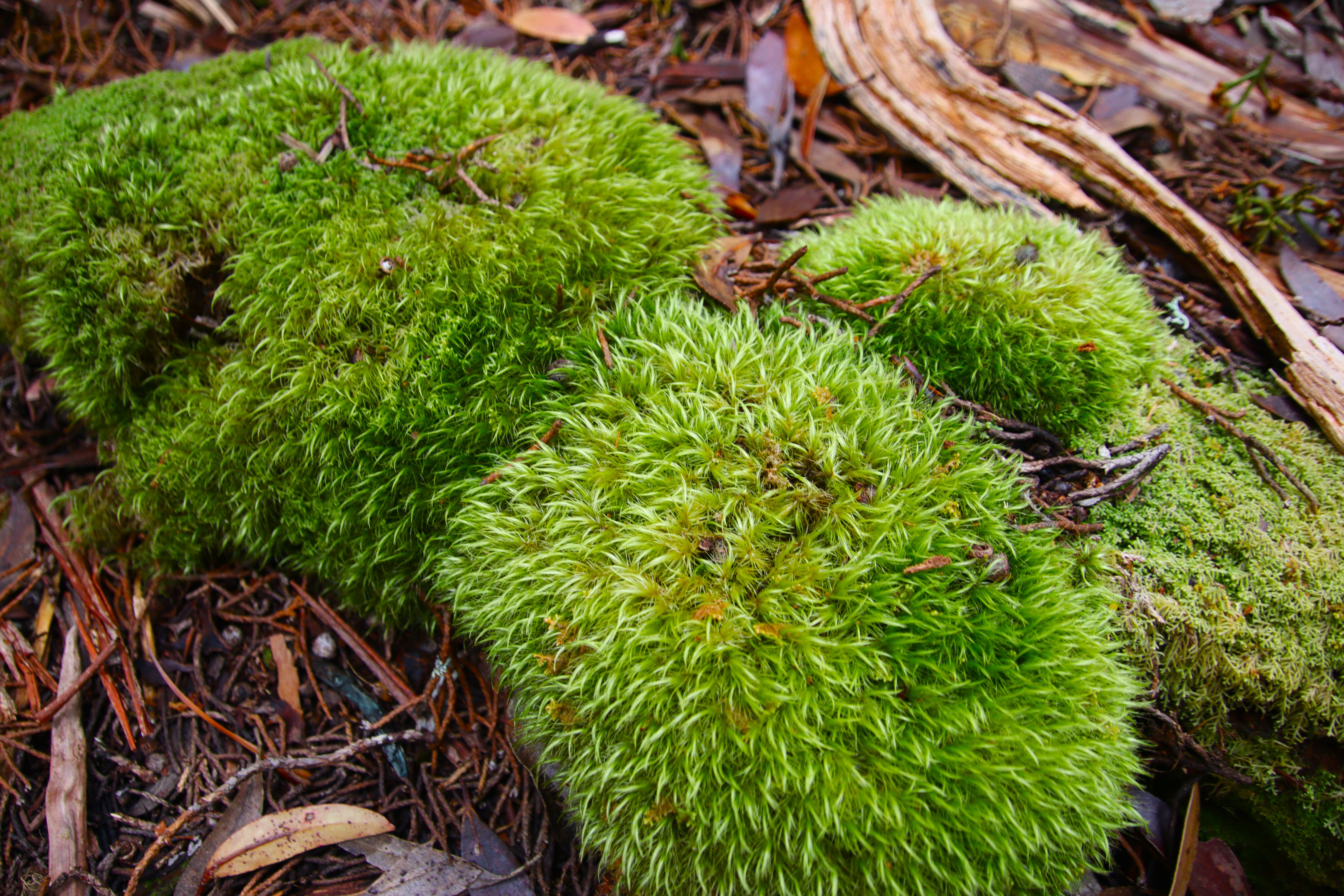


Eastern Quolls are present on the lawned area between the Visitor Centre and Campround, but in fewer numbers than on bountiful Bruny Island. The Quolls here prove decidedly difficult to photograph, taking off at breakneck speed under the spotlight.
Eastern Quoll.

Saturday morning I returned to Hobart to visit Salamanca Markets. Never really a market man, I found these markets filled perfectly with trinkets to furnish my new home. Additionally, I walked away the proud owner of an extremely warm beanie, perfect for those cold Bridgetown nights.
A visit to Tasmania is a must for those that enjoy wildlife and the great outdoors. This visit was memorable for the intimate moments with Quolls and Potoroos. I would live in Tasmania were it not for the paucity of reptiles compared to warm Western Australia, but I will return……the islands of Bass Strait are calling.
#QuollingAround


Awesome mate! Bruny was heaven for me too. Went a year ago and saw 25 Eastern quolls in 2 hours and long nosed potoroos. Didn’t see the golden brushtails. Were they in South Bruny?
I also share your experiences of Eastern Quolls on mainland Tasmania not sticking around with a spotlight, whereas the Bruny ones seemed more tame. There is a great spot for Eastern Quolls in Pyengana
LikeLike
The Golden Brushtail was crossing Bruny Main Rd on North Bruny halfway between the Get shucked Oyster Bar and Missionary Rd. Thanks for the tip on Pyengana. I’ve yet to visit the Ben Lomond area.
LikeLike
How amazing to spot a rare Golden Brushtail Possum on Bruny Island. Most of us are busy looking at the “big” sights and miss these wonderful little creatures. And we usually don’t go out at night with a spotlight. We should have more large enclosures where we can do guided night tours.
Also, I wonder how many patriotic Aussies could name a dozen small animals that quietly inhabit our diminished natural spaces.
LikeLike
More superb shots Jimmy. I actually think the Tas Native Hens shot is the star. Brilliant composition. Your Potoroo info helped me spend a few amazing nights in their presence. What stunning mammals. Thank you.
LikeLike