
Quobba Station
Quobba Station straddles 80km of stunning Ningaloo Coastline to the North of Carnarvon. It is most easily accessed by taking the sealed Blowholes Road that terminates at the coast.
Continued from:- Winter in Carnarvon – Part 2, Wooramel to Mundatharrda.
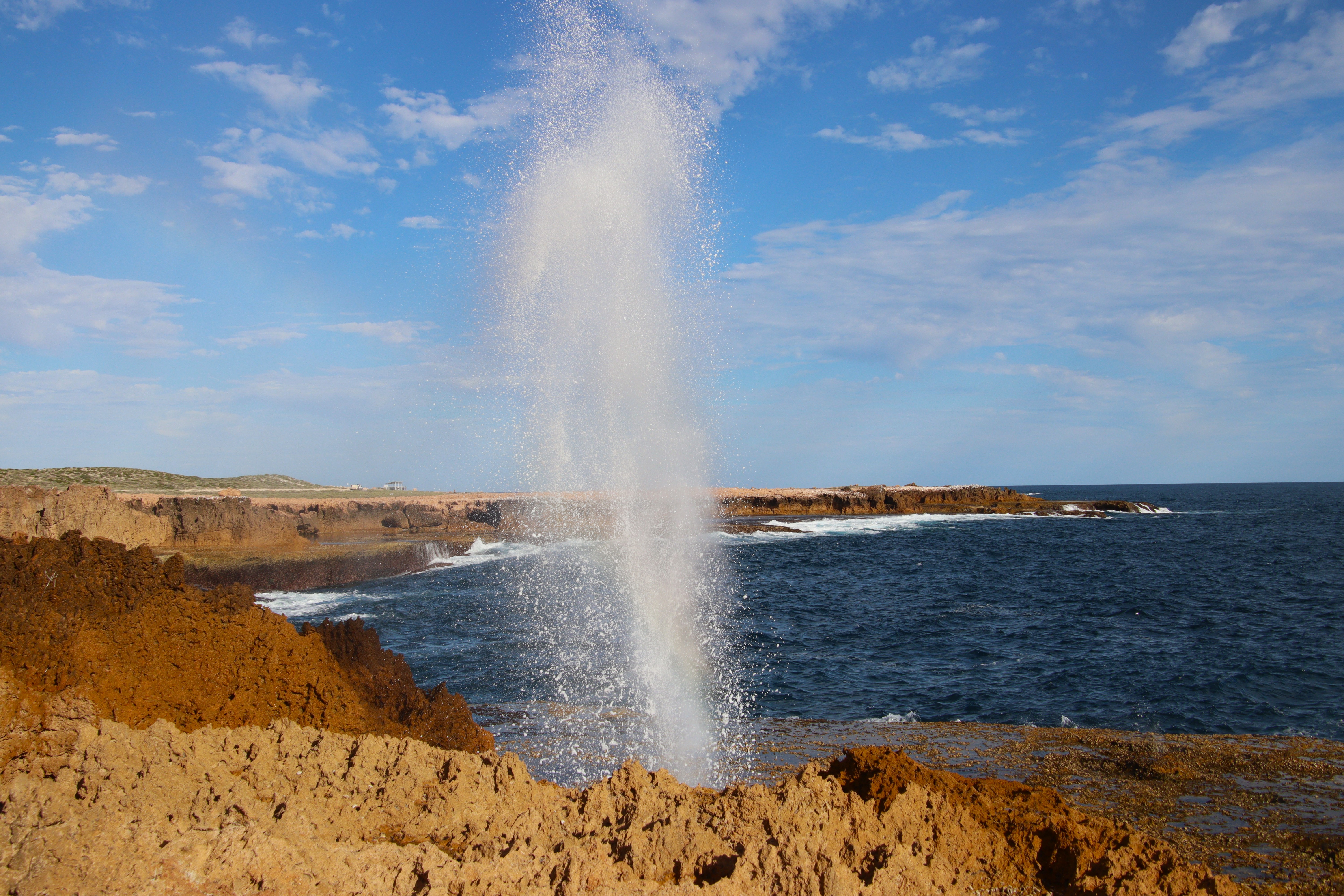
The Blowholes are a natural phenomenon caused when powerful Indian Ocean swells are forced through sea caves, and ultimately narrow clefts in the rock above, to form a plume of white water reaching high into the sky. They are situated to the left of the KING WAVES KILL sign.
Above The Blowholes, standing stately on a sand dune is Quobba Lighthouse. A 4WD track climbs the sand dunes to the lighthouse for impressive views. The lighthouse balcony is home to a Nankeen Kestrel nest, the real estate with the best view for a hundred kilometres!
Quobba Station.


Gnaraloo Road heads North from the Blowholes to Red Bluff and beyond, winding between rolling sand dunes and a wild shipwreck coast. The road is unsealed and best driven in 4WD, especially after heavy rain when water pools on the track.
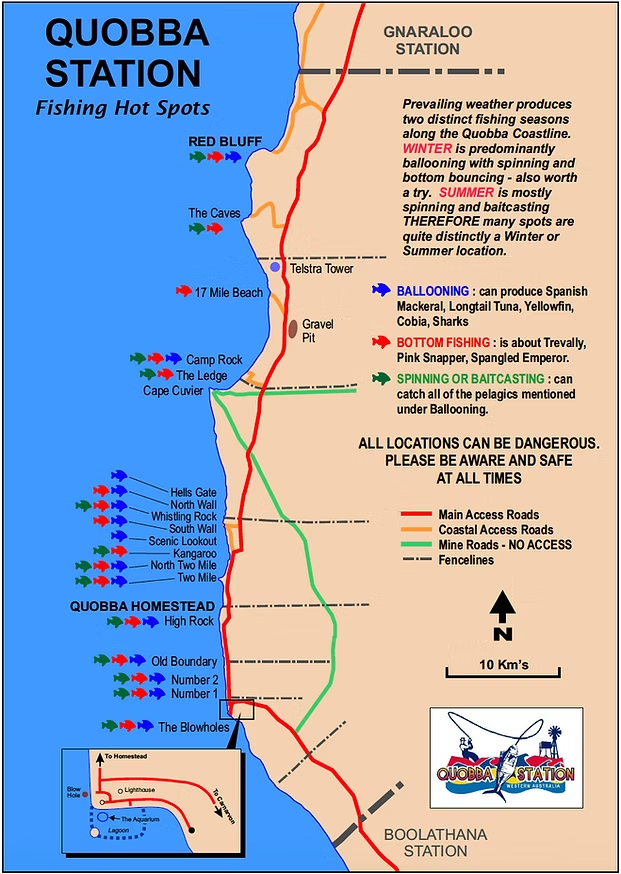
The highlights of this 187,000 acre pastoral station include wild surf breaks, excellent fishing, remote camping and of course wildlife. The most obvious wildlife are the large hordes of Feral Goats, introduced pests that inflict immeasurable damage on the delicate coastal habitat.
Goats Quobba Station.

Red Bluff
The turnoff to Red Bluff is well signposted. A short sandy track heads in the direction of the coast leading to a truly breathtaking view. A row of sand dunes leads to a remote camping site dwarfed by the dramatic red promontory of the bluff jutting out into the azure waters of the Indian Ocean.
Red Bluff.

To access Red Bluff drive to the Southern end of the campground, then on foot follow the well worn surfers track that snakes along the base of the bluff. The climb to the top is short and sharp, and a case of choose your own adventure, but the views are worth every step, and in season, perfect for whale watching.
The bluff plateau holds a healthy Wallaroo population, best seen late afternoon when hot daytime temperatures have dissipated. There are four subspecies of Wallaroo or Hill Kangaroo in Australia, and this the subspecies Osphranter robustus erubescens found West of the Great Dividing Range into Western Australia, where it is known colloquially as the Euro.
Erubuscens is the latin for reddening, referring to the russet colouration of this subspecies. This is especially pronounced in the powerful males, whose pelage is a rich, rusty hue.
Male Euro.
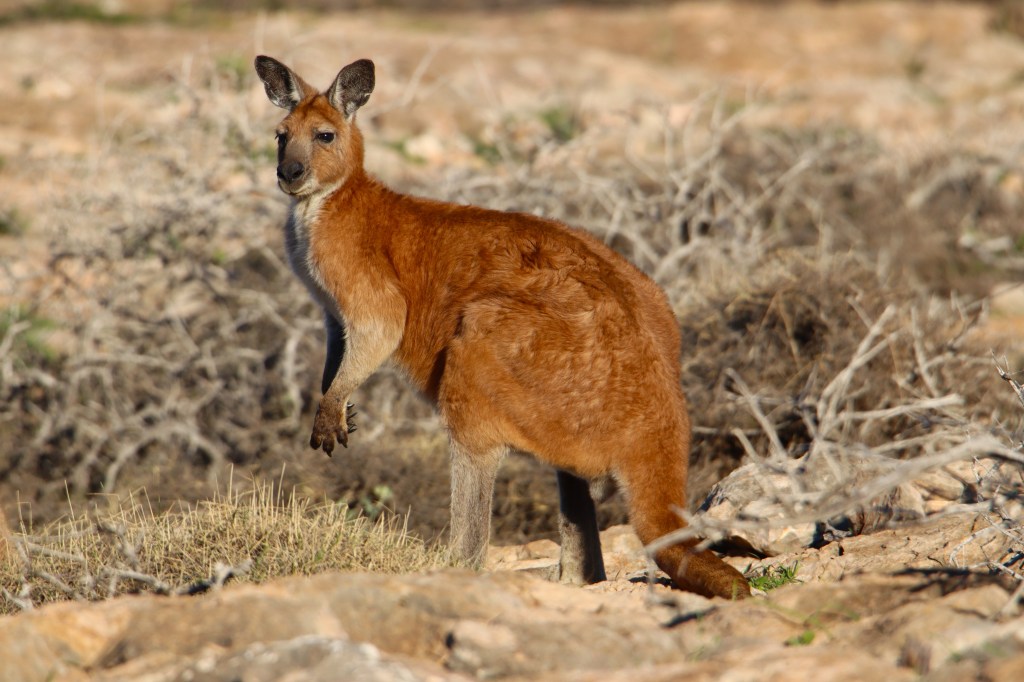
Female Euros are considerably smaller than the males with a light tan or sandy coat. They are often seen in pairs, the smaller animal being the most recent joey, which judging by the small size disparity remains with the mother for a considerable amount of time.
Female Euro.

Red Bluff is easily achieved as a day trip from Carnarvon, indeed on the weekends I wasn’t away camping, Red Bluff was my go-to weekend drive. Sat high above the ocean beneath a setting sun, surrounded by Euros was the most perfect way to spend a Sunday afternoon.
Cape Range National Park
Exmouth and the Cape Range National Park are a short (in WA terms) three and half hour drive from Carnarvon. The relative proximity provided an opportunity to visit this stunning area while working in Carnarvon. Four consecutive days off work were secured in early August, and so I found myself heading North on the Exmouth-Minilya Road looking for Thorny Devils.
Thorny Devils were certainly active at this time in early August, evidenced sadly by road killed animals. The luck changed North of the Coral Bay turnoff when a live, and rather skinny Devil was encountered basking on the road. I relocated it from the road to a rather superlative basking spot on top of a small termite mound. What an excellent start to the trip!
Thorny Devil.

Yardie Homestead Caravan Park
I had booked a camping site at Yardie Homestead Caravan Park on the West side of the Cape Range for the stay. The location is perfect for its proximity to Cape Range National Park.
That evening after darkness had cloaked the cape, the night sky came alive with a million stars. The moon was new and the complete absence of moonlight allowed viewing of the milky way with the naked eye. If there was ever a night to attempt astrophotography then this was it.
Vlamingh Head Lighthouse is a short drive from Yardie Homestead Caravan Park, and was the perfect location. Built in 1912 this 12.2m lighthouse sits on the tip of the Northwest Cape above vast spinifex plains to the East, and the waters of the Ningaloo Reef to the West.
Cape Vlamingh Lighthouse under a million stars.

Yardie Creek
It was an early start the following morning to join a boat tour of Yardie Creek. I hoped arriving before the other tourists would increase the chance of wildlife sightings.
https://yardiecreektours.com.au/
As is often the case on the Northwest Cape, it was a cool morning with a stiff wind blowing. Most people remain snuggled up in tents at this early hour, and so Yardie Creek was indeed deserted.
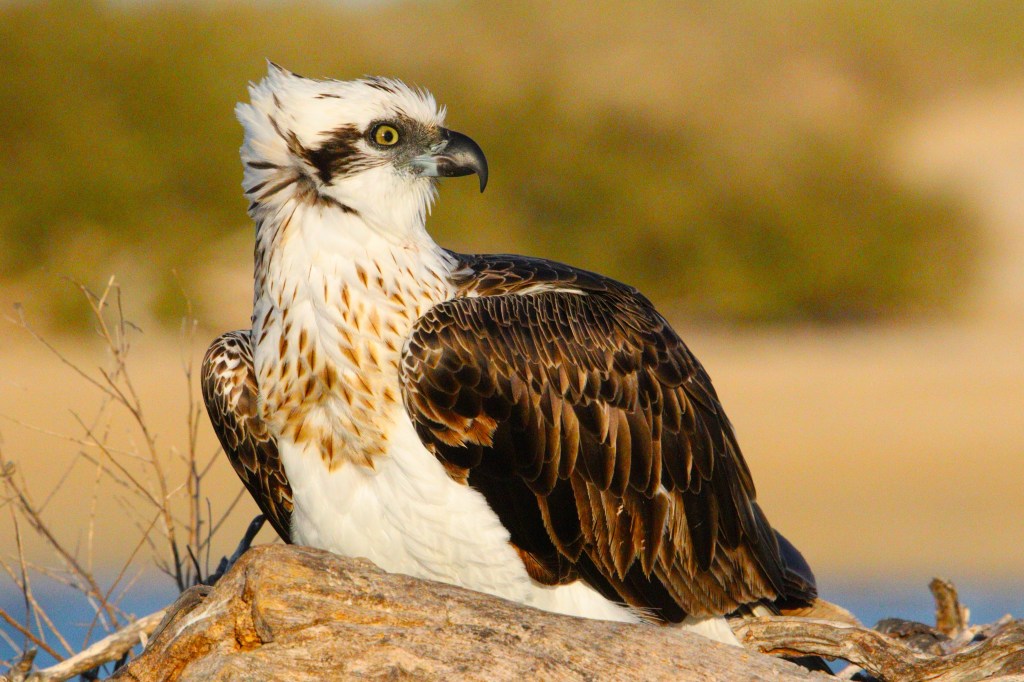
An the walking track crested a dune I spied an Osprey perched on the shore of the creek near the boat jetty. As I approached cautiously it proved reasonably confiding. Later that morning, during the actual boat tour, the nest of the local breeding pair was indicated by the tour guide.
Osprey.
The short 1.2km Yardie Creek Walk follows the Northern side of the gorge above the vertical red rock walls. Numerous Black-footed Rock Wallabies were perched on the lip of the gorge soaking up the warmth of the early morning sun. In addition the walk provided excellent views of the creek mouth and Ningaloo Reef and into the gorge itself.
Black-footed Rock Wallaby.

As the trail approached a thicket of mangroves the air was thick with the squeals and squabbles of a Flying Fox roost. The colony consisted entirely of Black Flying Foxes. This Yardie Creek roost is towards the Southern end of distribution of this species in WA, with nearby Carnarvon being the absolute limit. A colony also exists at Dales Gorge in Karijini NP. See below.
Karijini National Park and the Shark Bay Region.
This colony is a relatively new addition to Yardie Creek and contains approximately one hundred Bats. The walking trail is at eye level with the mangrove crowns, and so observation opportunities are superb as the viewer has the height advantage.
Black Flying Fox.

In the event, the Yardie Creek Boat Tour was excellent. Rock Wallaby sightings were numerous, and bird species seen included Corellas, Ospreys, Herons and even a Western Bowerbird.
Driving the Coastal Plain
Historically, the easiest mammal seen in Cape Range National Park was the Euro. During the time I lived in Exmouth in the late noughties, they would be hopping all over the road late afternoon. These days sightings of both live animals and roadkill have deceased.
Euro.

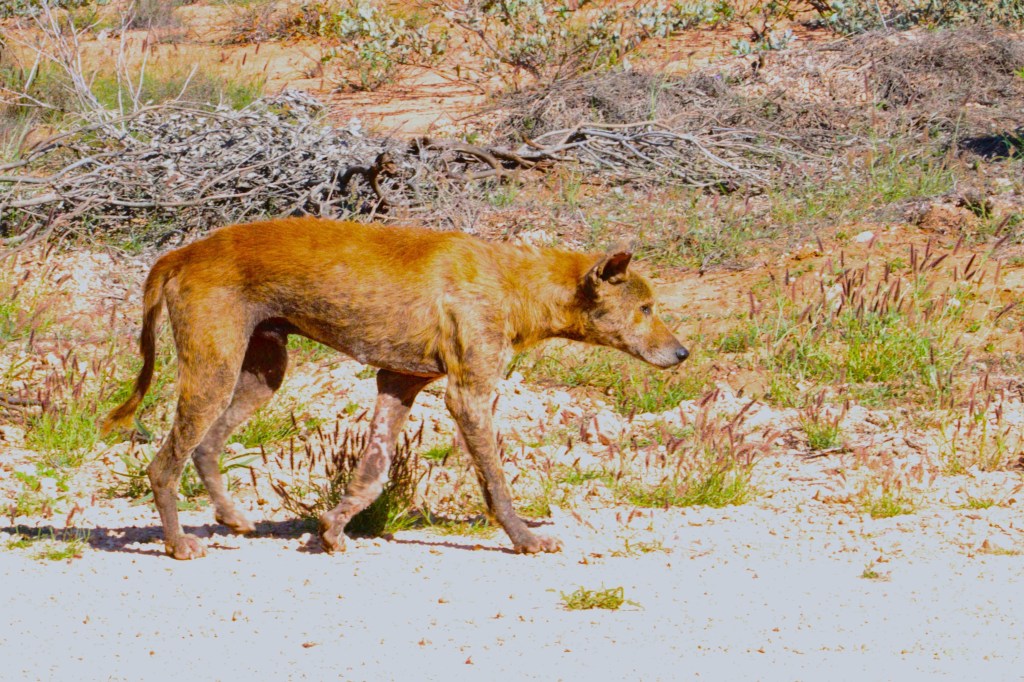
A park inhabitant that has increased in numbers recently is the Dingo. They have always been present on the Northwest Cape in low numbers, but I suspect the increase in tourism has presented increased opportunities, and numbers have benefited.
The Dingo pictured below was brazenly patrolling the road one morning in full sight of cars. The behaviour of this scavenger explains the absence of roadkill in the park these days.
Dingo.
Pilgramunna ( Pilgonoman ) Gorge
Although Rock Wallabies are easily seen at Yardie Creek and to a lesser extent Mandu Mandu Gorge, my favourite place to see Cape Range Rock Wallabies is at Pilgramunna Gorge. This site, although less accessible than Yardie Creek, is reached by following the unmarked track after Kurrajong Campsite.
Previously it was possible to access a small car park near the gorge entrance, but the recent addition of a gate prevents traffic. These days the visitor must park halfway and walk the final 600m. Immediately after the gate a felixer grooming trap had been installed. This is the latest addition to the arsenal deployed against Western Australia’s Feral Cat population.
Felixers use artificial intelligence to identify cat silhouettes. Once a cat has been identified a spray of 1080 poison is deployed, and then when the cat inevitably grooms the poison will be ingested. Cats are particularly common in desert environments and the felixer will provide protection for the Black-footed Rock Wallabies at Pilgramunna.
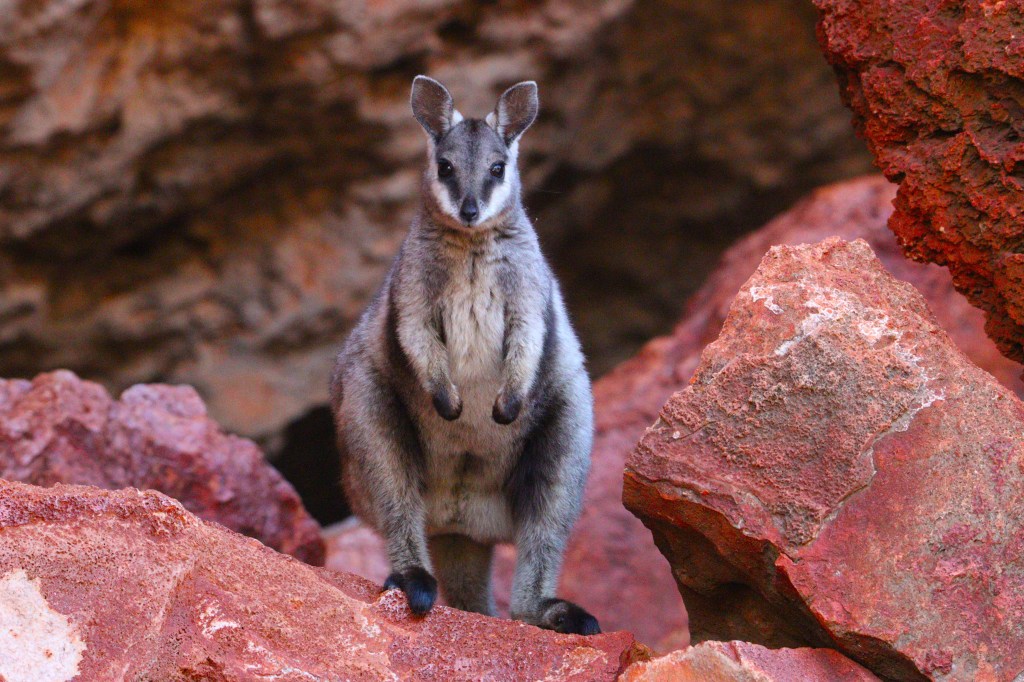
A late afternoon exploration of the gorge walls will quickly produce a Rock Wallaby. These diminutive cat-sized snacks are just adorable, with their intricate patterning. The photo below demonstrates wonderfully the genesis of the common name.
Black-footed Rock Wallaby.
This concludes the final part of the blog series documenting the wildlife around Carnarvon. It is a wonderful part of Western Australia worth including on any itinerary.
#QuollingAround
 Quolling Around
Hi Jimmy, We are on Day 49 of our âWinter 25â trip and currently in Kalbarri, where we are staying for a week. Itâs full into wildflower season in the region and the vast surfaces of Kalbarri NP are golden yellow with the different wattle species in bloom. Loved reading about your trips to Yardie Creek and Quobba blowholes! The Aquarium beach just to the left of the blowholes was great for a snorkel. Sadly the Ningsloo coral reefs are suffering with green algae on them, heralding a plight of rise in water temperature! We found the snorkeling better in François Peron NP, at Bottle Beach. We did a 4WD bus excursion to the top, amazing views, and also rescued a Thorny Devil who rest immobile on the track, even when the cars are close. We will be back in Nannup by end Sept before school holidays start. We heard it was a cold and wet winter in Nannup! Catch up when we get back! Fond regards, Izzy & Daniel.
LikeLike
‘Cat-sized snacks’!!!!? How could you Jimmy? Superb photos as usual!
LikeLike